


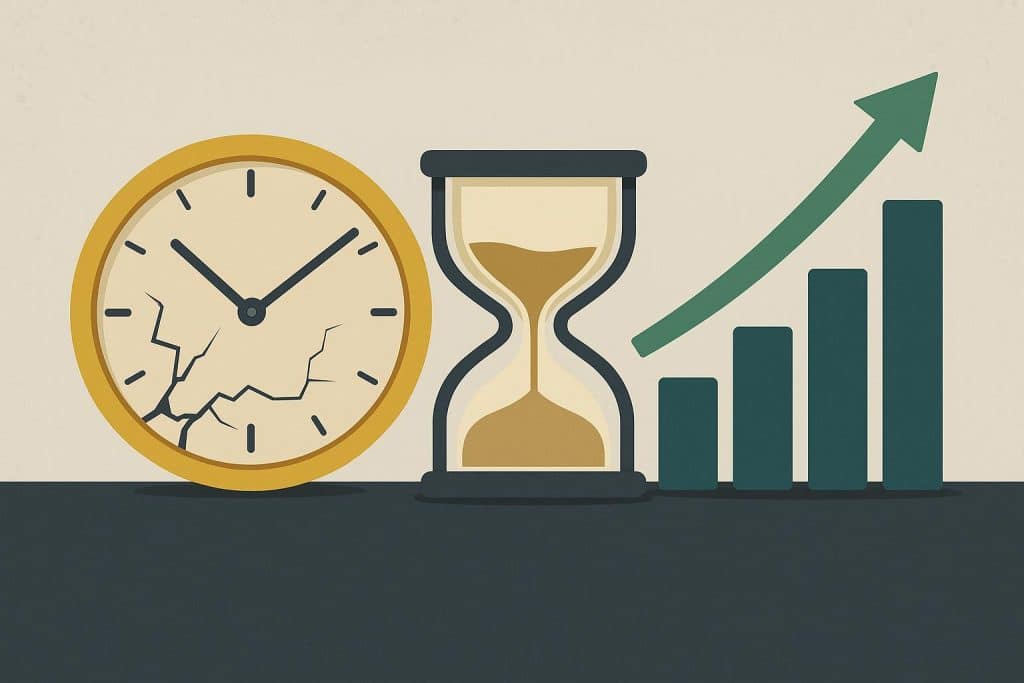
Business owners are often encouraged to be cautious with spending, particularly during uncertain economic conditions. Careful financial management is undoubtedly important, but there is a difference between making prudent decisions and delaying investment opportunities for too long. While many businesses focus on the visible costs of investing, fewer pay attention to the hidden costs associated with waiting.
At first glance, postponing investment may appear to reduce risk. The business preserves cash, avoids additional commitments, and maintains flexibility. However, every delayed decision carries its own consequences. In many cases, the cost of standing still can gradually exceed the cost of moving forward.
Understanding these hidden costs can help business owners make more informed decisions about growth, efficiency, and long-term competitiveness.
One of the most significant costs of delaying investment is lost productivity. Equipment, technology, and infrastructure all play a role in how efficiently a business operates. Over time, ageing systems can begin to slow processes, increase downtime, and create bottlenecks that affect overall performance.
The impact is often gradual. Because inefficiencies develop slowly, they may not be immediately obvious. Staff adapt to outdated processes, work around limitations, and continue delivering results despite increasing challenges.
However, these small inefficiencies accumulate. Minutes lost each day can become hours over the course of a month and significant operational costs over the course of a year.
Another hidden cost involves maintenance and repair expenses. As equipment ages, maintenance requirements typically increase. Breakdowns become more frequent, repairs take longer, and replacement parts may become harder to source.
Business owners sometimes continue investing in older equipment because replacement appears expensive. Yet the cumulative cost of repeated repairs, operational disruption, and reduced efficiency can quietly erode profitability.
Customer experience can also be affected. In competitive markets, clients increasingly expect speed, reliability, and consistent service. Outdated systems may make it more difficult to meet those expectations.
Delays, quality issues, and reduced responsiveness can gradually influence customer satisfaction. Even if customers do not explicitly identify the underlying cause, the impact on retention and reputation can be significant.
Perhaps one of the least visible costs is missed opportunity. Growth opportunities rarely arrive according to a convenient schedule. New contracts, market expansion possibilities, strategic partnerships, and increased demand often require businesses to act quickly.
Organisations that delay investment may find themselves unable to respond effectively when these opportunities arise. Competitors with greater capacity or more modern infrastructure may move faster and secure advantages that could have been available to others.
Workforce considerations are another important factor. Employees generally want to work in environments where they have the tools and resources needed to perform effectively. Outdated equipment or inefficient systems can create frustration and reduce morale.
Over time, this can affect productivity, engagement, and even staff retention. Recruiting and training replacements often costs considerably more than many businesses initially realise.
At a certain stage of growth, business owners frequently begin reassessing whether caution is still serving their objectives. It is often during these discussions that funding specialists such as Edinburgh Asset Finance become part of broader conversations about balancing investment opportunities with financial responsibility.
Technology represents a particularly important area where delays can become costly. Modern software, automation tools, and digital systems continue to evolve rapidly. Businesses that postpone upgrades for extended periods may eventually face a much larger gap between current capabilities and industry expectations.
The challenge is not simply catching up with competitors but recovering from years of missed efficiency improvements. In some cases, delayed investment creates a situation where multiple upgrades become necessary at once.
Market position can also be affected by inaction. Businesses that invest strategically often improve capacity, expand service offerings, or enhance customer experiences. Those that delay investment may gradually lose competitive ground even if day-to-day operations appear stable.
This process can be difficult to detect because it often happens slowly. Revenue may remain steady for some time, masking the fact that competitors are becoming more attractive to customers.
Inflation introduces another hidden cost. The price of equipment, vehicles, technology, and other business assets tends to increase over time. Delaying a planned investment for several years may result in significantly higher costs when the purchase eventually becomes unavoidable.
In this situation, waiting has not reduced expenditure. It has simply postponed it while potentially increasing the final cost.
Risk management should also be considered. Some owners view delaying investment as the safer option. However, ageing infrastructure, reduced efficiency, and limited capacity can introduce risks of their own.
Businesses that lack the resources needed to meet demand or adapt to changing conditions may find themselves exposed to operational and financial pressures that could have been addressed earlier.
Importantly, not every investment decision should be made immediately. Careful evaluation remains essential. The objective is not to invest recklessly but to recognise when excessive caution may be creating its own set of challenges.
Successful businesses often strike a balance between preserving financial stability and pursuing opportunities that support long-term growth.
The hidden costs of waiting too long are rarely reflected in a single invoice or financial statement. They appear through lost productivity, missed opportunities, declining competitiveness, rising maintenance costs, and reduced operational flexibility.
Because these costs develop gradually, they can be easy to overlook. Yet over time, their cumulative impact can be substantial.
By evaluating investment decisions through a broader lens, business owners can gain a clearer understanding of the true cost of delay. Sometimes the greatest financial risk is not investing too soon, but waiting until opportunities have already passed and competitive advantages have been lost.
In business, timing often matters as much as the decision itself. Recognising when investment supports future success can help organisations remain efficient, competitive, and prepared for the opportunities that lie ahead.


Angela Spearman is a journalist at EzineMark who enjoys writing about the latest trending technology and business news.