


Key Takeaways
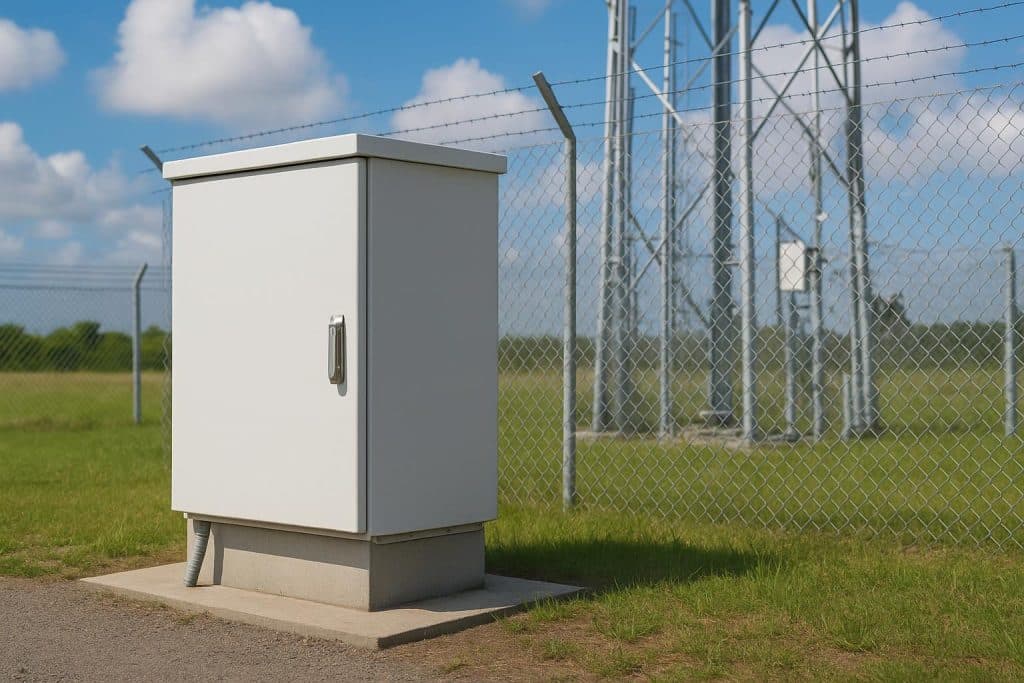
Weatherproof enclosures play a critical role in shielding infrastructure from environmental adversities like flooding, corrosion, and extreme temperatures. By establishing a robust barrier, these enclosures effectively enhance system integrity against potential threats.
NEMA 6P and IP68 ratings are pivotal in evaluating enclosure performance. They assure that the materials can endure exposure to water and particulates, especially in severe settings. Adhering to these benchmarks is key for ensuring safety and reliability within infrastructure initiatives.
Investing in enclosures that cater to specific operational needs can significantly reduce risks, thus minimizing expensive downtime during crucial operations. Oftentimes, custom solutions are required to secure peak performance across a variety of applications.
The durability of weatherproof enclosures has been remarkably improved by modern materials, including advanced polymer composites and metals that resist corrosion, enabling them to withstand extreme conditions effectively.
Integration of smart technology, such as sensors that monitor temperature and moisture, is growing in importance for weatherproof enclosures. Such innovations allow for timely interventions, thereby preserving system integrity and enhancing performance.
With sustainability taking center stage in infrastructure design, engineers are increasingly exploring eco-friendly materials and practices that lessen environmental impact while maintaining functionality. This shift not only promotes innovation but also encourages greener construction approaches.
Looking ahead, advancements could feature self-healing technologies alongside smarter materials that adapt to environmental changes, paving the way for more efficient weatherproof solutions and improved resource management in infrastructure projects.
Why NEMA 6P and IP68 Ratings Matter for Infrastructure
Understanding Environmental Challenges for Critical Infrastructure
Various environments challenge infrastructure systems in distinct ways. Be it coastal locations facing relentless saltwater or tunnels constantly exposed to moisture and sediment, the environment poses significant threats to equipment integrity. Resilience is non-negotiable for modern infrastructure, as preparations for environmental stresses are imperative. Weatherproof enclosures provide a solid defense against the elements.
Unprotected systems can be compromised by flooding, extreme temperatures, dust storms, and corrosive substances. Understanding these environmental risks is crucial to mitigating potential failures before they manifest. Engineers are called upon to create solutions that address current needs while also preparing for future challenges.
Decoding NEMA and IP Ratings: What Engineers Need to Know
NEMA 6P and IP68 ratings stand as industry standards when it comes to evaluating performance in extreme conditions. While NEMA (National Electrical Manufacturers Association) ratings indicate an enclosure’s resilience against varying environmental parameters, IP (Ingress Protection) ratings focus on its ability to withstand water and particles. For reliable infrastructure, these ratings are instrumental in selecting suitable materials and designs.
- NEMA 6P: Engineered to endure long-term immersion in water.
- IP68: Guarantees complete protection from dust and is ideal for underwater applications.
- Real-world implementations frequently merge these standards for enhanced durability.
Professionals need to grasp these ratings to guarantee that they utilize the right materials and levels of protection. For instance, systems located in tunnels require enclosures that can not only handle substantial water ingress but also safeguard electrical connections from dust.
Compliance and Safety: Why Ratings Can’t Be Overlooked
Adhering to NEMA and IP ratings often becomes a fundamental requirement in infrastructure projects. Regulatory authorities demand strict compliance to these standards, which not only enhances safety but also reliability. Investing in appropriate enclosures minimizes the risks that could lead to costly operational downtimes.
“Choosing enclosures with appropriate ratings is more than compliance; it’s a gateway to sustainable infrastructure.”
The safety benefits arising from these ratings extend well beyond mere compliance. Installation teams can confidently focus on securing projects, assured that the equipment is built to endure unfavorable conditions. Such a proactive approach cultivates an environment where potential hazards are anticipated and effectively managed.
Innovative Designs in Weatherproof Enclosures
Leading-Edge Materials for Extreme Durability
The choice of materials is critical in determining the functionality of enclosures. Recent advancements in polymer composites and corrosion-resistant metals offer exceptional protection. Currently, weatherproof enclosures utilize materials that resist not only water but also temperature extremes and corrosive elements.
- Polycarbonate: Notable for its high impact resistance while remaining lightweight.
- Stainless Steel: Renowned for unparalleled durability against corrosion in saline environments.
- Fiberglass: Suitable for extreme temperatures and completely resistant to rust.
Such exceptional materials ensure that underlying systems remain safeguarded, regardless of external conditions. Engineers often must consider the lifespan and upkeep of these envelopes, requiring a design focus that balances strength with functionality.
Custom Solutions: Tailoring Enclosures to Specific Needs
In the realm of weatherproof enclosures, one size certainly doesn’t fit all. Often, custom solutions are vital for achieving peak performance. Certain features, like enhanced insulation or ventilation, can be specifically designed to cater to unique operational requirements. Clients typically observe enhanced functionality when collaborating with manufacturers who address their tailored needs.
- Custom sizes for limited spaces.
- Integrated cooling systems designed for power electronics.
- Special finishes crafted to tackle localized environmental issues.
This strategy fosters cooperation between engineers and manufacturers. A united vision results in the creation of enclosures that not only suit the project but also elevate performance standards.
How Advanced Designs Enhance Asset Protection
Contemporary design methodologies incorporate ergonomic considerations along with maintaining structural integrity. Today’s engineers weigh not only environmental protection but also how easily maintenance tasks can be performed. Advanced designs promote optimal asset protection. Features like locking mechanisms and tamper-proof closures add another layer of security.
Designing an enclosure must facilitate quick access for servicing, all while ensuring protection. Thus, striking the right balance between durability and practicality is essential. Well-designed weatherproof enclosures enable quick inspections and repairs that keep systems running smoothly without unnecessary delays.
“A well-designed enclosure is like a well-crafted shield; it protects without hindering.”
Integrating Weatherproof Enclosures into Infrastructure Projects
Key Considerations for Infrastructure Engineering Teams
Before integrating weatherproof enclosures, teams must consider multiple aspects. Professionals should evaluate environmental risks, warranty specifications, and expected service life. Analyzing these elements informs the criteria for enclosure selection. While cost is undeniably important, long-term value often overshadows initial savings.
- Assess the materials’ lifecycle.
- Scrutinize maintenance needs in relation to operational demands.
- Consider local environmental conditions that might influence performance.
Balancing budgetary constraints with quality ensures that projects not only satisfy immediate demands but also bolster longevity. Keeping an eye on the future contributes significantly to enhanced overall project performance.
Case Studies: Success Stories from Real-World Applications
A multitude of successful deployments underscores the efficacy of weatherproof enclosures for infrastructure. In urban settings, coastal power stations often contend with severe weather. The implementation of NEMA-rated enclosures has markedly strengthened their resilience against flooding and erosion.
- Transportation Tunnels: Employed custom enclosures that integrated climate control, ensuring operational efficiency even amid fluctuating conditions.
- Telecom Stations: Fitted with robust enclosures that protect critical communication infrastructure from environmental threats.
- Bridges: Designed to resist corrosive elements, thus extending the lifespan of electronic monitoring devices.
These case studies highlight not just the versatility of enclosures but also their essential role in preserving the integrity of vital systems. Success here is intimately linked with foresight and a dedication to exceptional design and material selection.
Best Practices for Installation and Maintenance
The installation and upkeep of weatherproof enclosures demand attention to detail. Professionals advocate for adhering to best practices during installation to maximize their effectiveness and longevity. Employing proper sealing techniques significantly reduces any chances of ingress.
- Conduct quality checks post-installation to reveal potential vulnerabilities.
- Schedule routine maintenance to inspect seals, latches, and material integrity.
- Keep records of any environmental changes that may require adaptations.
Such practices advocate for a proactive maintenance approach. Early detection of issues can result in notable savings in both time and resources.
Future Trends in Weatherproof Enclosure Technology
The Role of Smart Technology in Environmental Protection
As infrastructure continues to evolve, so does the incorporation of various technologies within it. Smart technology is increasingly prevalent for monitoring environmental conditions inside weatherproof enclosures. Sensors can notify teams regarding temperature changes, moisture levels, and even integrity breaches.
- Real-time data collection enables prompt interventions.
- Remote monitoring features improve oversight in hard-to-reach areas.
- Predictive analytics can anticipate maintenance needs, potentially averting failures.
When effectively integrated, smart technology not only boosts the performance of weatherproof enclosures but also fortifies vital infrastructure. Built-in sensors yield insights that empower teams to respond quickly to emerging threats.
How Sustainability Shapes Future Infrastructure Designs
Today’s infrastructure projects encounter mounting scrutiny regarding their environmental footprint. Engineers face the challenge of crafting enclosures that lessen their ecological impact while maximizing functionality. The rising trend toward sustainable materials reveals this shift, prioritizing greener alternatives that uphold performance.
- Utilization of eco-friendly materials to minimize carbon emissions.
- Design structures that support recyclability at the end of their lifecycle.
- Energy-efficient manufacturing processes leading to a reduced overall environmental effect.
By advocating for sustainable practices, the industry reaffirms its dedication to environmental stewardship while establishing new standards for future designs. This focus spurs innovation that could yield unforeseen advantages over the long term.
Anticipating the Next Generation of Waterproof Solutions
The outlook for weatherproof enclosures is promising, brimming with potential innovations just on the horizon. Anticipated developments may include advanced materials that adapt to environmental variations, alongside self-healing technologies that can mend minor damages autonomously. The forthcoming generation promises enhanced efficiency in protecting infrastructure and optimizing resource management.
A proactive mindset anchored in a comprehensive grasp of specifications, real-world examples, and emerging trends sets the foundation for enduring solutions. Clients in search of weatherproof enclosures for infrastructure will discover that future-proofing their projects is not merely advantageous – it’s essential.
FAQ
What types of projects benefit most from weatherproof enclosures?
Weatherproof enclosures hold particular value for projects located in harsh environments, including coastal areas, transportation tunnels, and regions susceptible to extreme weather. Their robustness ensures that vital infrastructure, such as telecommunications and power systems, remains operative despite environmental hardships.
Which industries are seeing increased demand for weatherproof solutions?
Sectors such as utilities, telecommunications, and transportation are witnessing a surge in demand for weatherproof solutions. These industries require dependable equipment capable of withstanding the elements, thus guaranteeing uninterrupted service and operational continuity.
What role do smart technologies play in enhancing enclosure functionality?
Smart technologies significantly elevate the functionality of weatherproof enclosures by integrating sensors that monitor temperature, moisture, and structural integrity. This feature enables real-time data collection, facilitating proactive maintenance and immediate responses to environmental fluctuations.
How do manufacturers ensure conformity with NEMA and IP ratings?
Manufacturers must follow rigorous testing protocols to ensure adherence to NEMA and IP ratings. This involves comprehensive quality assurance measures during production, as well as third-party evaluations to verify the durability and resistance of their enclosures under extreme conditions.
Can weatherproof enclosures be customized for specific environmental conditions?
Certainly. Many manufacturers provide custom solutions tailored to fit unique environmental conditions and operational requirements. Customization can encompass features such as enhanced insulation, integrated cooling mechanisms, and specialized materials designed to tackle distinct local challenges.
What maintenance practices enhance the lifespan of weatherproof enclosures?
Regular maintenance is vital for ensuring longevity. Best practices involve routine inspections of seal integrity, confirming proper sealing techniques, and keeping a record of any changes in environmental conditions that may affect enclosure performance. These proactive measures are crucial for early problem detection.
What are some emerging trends in weatherproof enclosure technology?
Some emerging trends include the development of self-healing materials and advanced sensors integrated into enclosures. These advancements promise to improve durability and streamline maintenance by empowering enclosures to adapt to environmental challenges and immediately alert teams about potential concerns.
How does the choice of materials impact the effectiveness of weatherproof enclosures?
The choice of materials is fundamental to the efficacy of weatherproof enclosures. Advanced materials, such as corrosion-resistant metals and high-impact polymers, deliver superior protection against environmental stresses, which maximizes the longevity and performance of the enclosure even in challenging settings.


Angela Spearman is a journalist at EzineMark who enjoys writing about the latest trending technology and business news.