


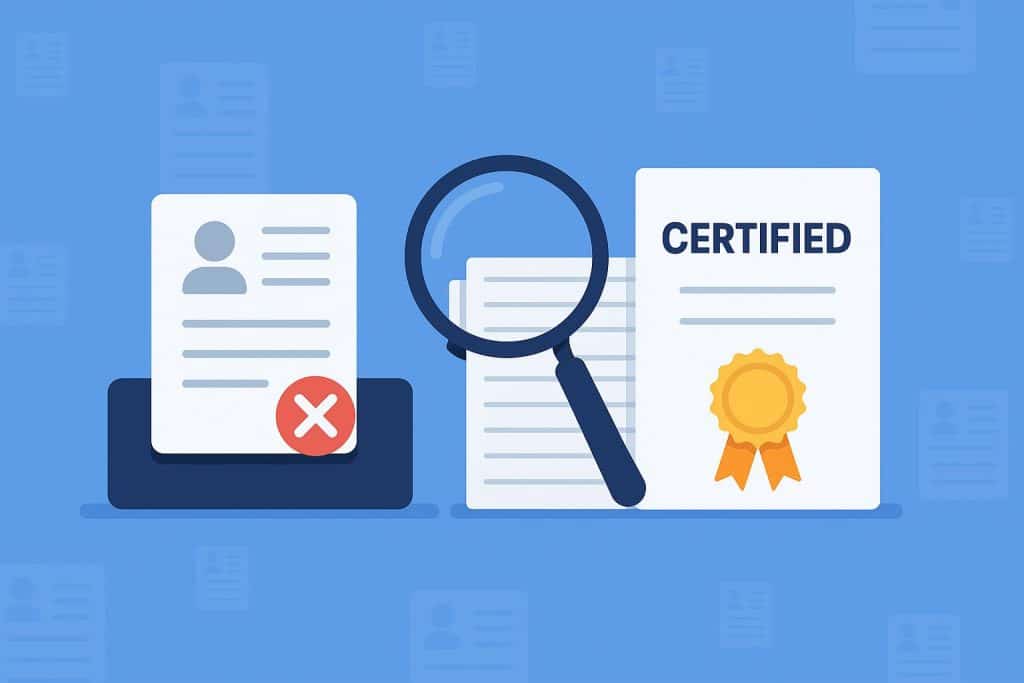
The job market is tough. Getting your resume noticed by Human Resources (HR) feels like a huge challenge. HR professionals get hundreds of resumes for a single job posting. They spend very little time looking at each one. But what if I told you there is a way to skip that initial resume screening process? What if your resume could go straight to the top of the pile? I am a senior business analyst and I have been on both sides of the table. I can tell you that holding recognized business analyst certifications is the secret to bypassing the screening process.
In this article, we will look at exactly what HR looks for and why certified business analysts often skip the resume screening process.
The HR Screening Process Explained
Before we discuss how to bypass the screening process, we need to understand how it works. When a company posts a job opening for a business analyst role, the HR department is the first line of defense. Their job is to filter out candidates who do not meet the basic requirements.
HR professionals use Applicant Tracking Systems (ATS). An ATS scans resumes for specific keywords related to the job description. If your resume does not have those keywords, the ATS will reject it. Even if a human reads your resume, they are looking for quick indicators that you are qualified. They look for specific skills, experience, and education. If they do not see those indicators quickly, they move on to the next resume.
The problem is that many candidates have similar skills and experience. It is hard for HR to tell who is truly qualified and who is just using the right buzzwords. This is where business analyst certifications come in.
Why Certifications Matter to HR
HR professionals are not always experts in business analysis. They rely on external validation to determine a candidate’s qualifications. A certification is that external validation. It tells HR that an independent organization has assessed your skills and knowledge.
Here is why certifications are so important to HR:
1. Instant Credibility
A certification gives you instant credibility. It shows that you are committed to your profession and that you have met a certain standard of knowledge. When an HR professional sees a recognized certification on your resume, they know you are not just making up your skills. They know you have the foundation needed to be successful in a business analyst role.
2. Standardization of Skills
The business analyst role can vary greatly from company to company. One company might want a technical business analyst, while another wants a functional business analyst. A certification provides a standardized set of skills and knowledge. HR knows that a certified professional has a core understanding of business analysis principles, regardless of their specific background.
3. Proof of Continuous Learning
The business analysis field is constantly changing. New tools and techniques are always emerging. A certification shows that you are committed to continuous learning. Many certifications require ongoing education to maintain them. HR likes candidates who are willing to invest in their own professional development.
4. Reduced Risk for Employers
Hiring a new employee is a risk. If the employee does not work out, the company loses time and money. A certification reduces that risk. It gives the employer confidence that the candidate has the necessary skills to do the job. HR is more likely to pass along a certified candidate because it makes their job easier and reduces the risk of a bad hire.
How Certifications Help You Bypass the Screening Process
Now that we know why certifications matter to HR, let’s look at how they help you bypass the screening process.
The Power of Keywords
As mentioned earlier, Applicant Tracking Systems scan resumes for keywords. Job descriptions for business analyst roles almost always include certification names as preferred or required qualifications. When you include these certifications on your resume, your resume is much more likely to pass the ATS scan.
For example, if a job description asks for a Certified Business Analysis Professional (CBAP), and you have that certification on your resume, the ATS will flag your resume as a strong match. Your resume will automatically move to the next stage of the hiring process.
Direct Sourcing by Recruiters
Recruiters do not just wait for applications to come in. They also actively search for candidates on platforms like LinkedIn. When they search for business analysts, they often use certification names as search terms.
If you have a recognized certification on your LinkedIn profile, you are much more likely to be found by a recruiter. They may reach out to you directly with a job opportunity. In this scenario, you bypass the traditional application and screening process entirely.
Internal Referrals and Networking
Certifications can also help you build your network. When you take a certification course or join a professional organization, you meet other business analysts. These connections can lead to internal referrals.
An internal referral is one of the best ways to bypass the screening process. If an employee recommends you for a job, HR is much more likely to look at your resume. Having a certification makes it easier for someone to recommend you because they know you have the required skills.
Choosing the Right Business Analyst Certification
Not all certifications are equal. HR professionals look for recognized and respected certifications. Some of the most well-known organizations offering business analyst certifications include the International Institute of Business Analysis (IIBA) and the Project Management Institute (PMI).
Here are a few popular certifications that HR looks for:
- ECBA (Entry Certificate in Business Analysis): This is a great starting point for people new to the field.
- CCBA (Certification of Capability in Business Analysis): This is for professionals with some experience.
- CBAP (Certified Business Analysis Professional): This is for senior business analysts with extensive experience.
- PMI-PBA (PMI Professional in Business Analysis): This is a strong option for those working in project management environments.
- Agile Analysis Certification (AAC): This is becoming increasingly important as more companies adopt Agile methodologies.
If you are looking to get certified, I highly recommend checking out comprehensive training programs. Finding the right training can make all the difference in passing your exam. You can find excellent resources and prepare for these exams by exploring Business Analyst Certifications. Getting proper training ensures you understand the concepts deeply, rather than just memorizing facts for a test.
The Senior Business Analyst Perspective
As a senior business analyst, I have reviewed many resumes and interviewed many candidates. I can tell you that a certification is often the deciding factor between two similar candidates.
When I see a resume with a recognized certification, I immediately know a few things about the candidate. I know they understand the standard terminology. I know they understand the core processes of business analysis, like requirements gathering and stakeholder management. I know they are serious about their career.
A candidate without a certification might be just as capable. However, it takes more effort for me to figure that out. I have to ask more probing questions during the interview. I have to dig deeper into their past projects. A certification saves me time and effort. It provides a baseline of trust.
Beyond the Resume: Real-World Value
While bypassing the resume screening process is a great benefit, the value of a certification goes far beyond getting an interview. The knowledge you gain while preparing for a certification will make you a better business analyst.
Better Problem-Solving Skills
Certification exams test your ability to apply business analysis principles to real-world scenarios. This improves your problem-solving skills. You learn how to approach complex problems methodically. You learn how to identify the root cause of an issue and develop effective solutions.
Improved Communication
Business analysts need to communicate with many different stakeholders, from technical teams to business leaders. Certification programs emphasize clear and concise communication. You learn how to document requirements effectively and how to present your findings to others.
Increased Earning Potential
Certified business analysts often earn more than their non-certified peers. Employers are willing to pay a premium for verified skills and knowledge. A certification is an investment that can pay off significantly over the course of your career.
Conclusion
The job market is competitive. You need every advantage you can get. If you want to bypass the resume screening process and get your resume noticed by HR, a business analyst certification is the way to go.
Certifications provide instant credibility, standardize your skills, and reduce the risk for employers. They help you pass ATS scans and make you more visible to recruiters. More importantly, the process of getting certified makes you a stronger, more capable professional.
If you are serious about a career in business analysis, investing in a recognized certification is one of the smartest moves you can make. It is not just about getting the job; it is about building a successful and rewarding career. Start exploring your options today and take the first step towards bypassing the screening process and landing your dream role.


Angela Spearman is a journalist at EzineMark who enjoys writing about the latest trending technology and business news.