


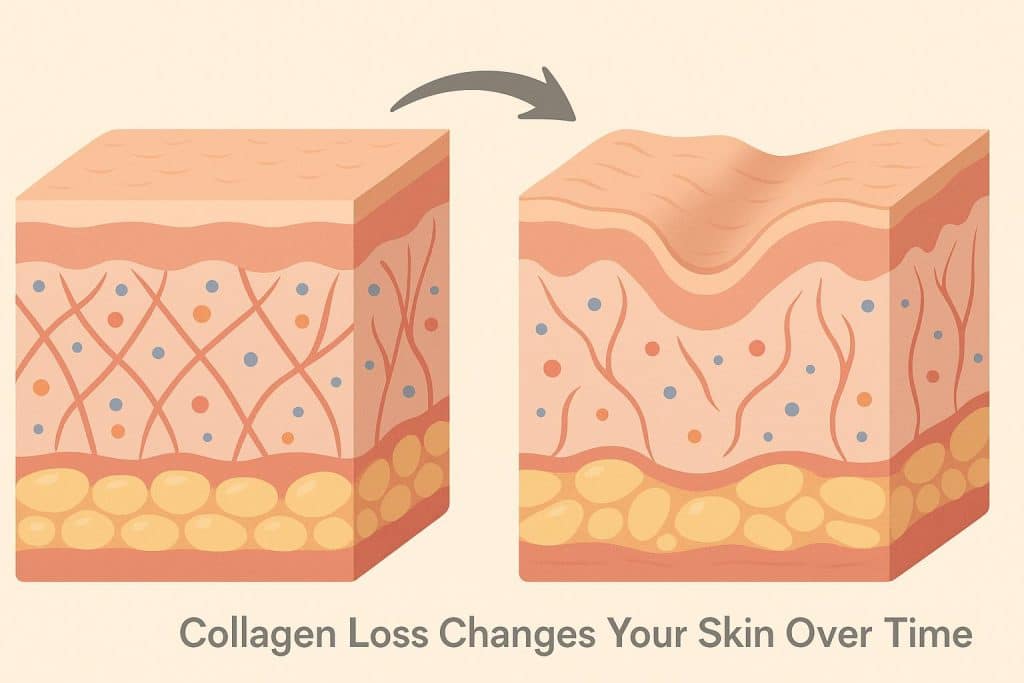
Healthy, youthful-looking skin owes much of its appearance to collagen. This remarkable protein acts as one of the skin’s main structural building blocks, helping to keep it firm, smooth and resilient. While collagen is naturally abundant during childhood and early adulthood, its production gradually declines as we age. This change is completely normal, yet it has a noticeable effect on how the skin looks and feels over time.
Many of the visible signs commonly associated with ageing, such as fine lines, wrinkles, reduced firmness and thinner skin, are closely linked to the gradual loss of collagen. Although this process cannot be stopped entirely, understanding what happens beneath the skin’s surface can help explain why certain changes occur and how healthy habits may help support skin quality for longer.
What Exactly Is Collagen?
Collagen is the most abundant protein in the human body. It forms part of the skin’s support network, providing strength and helping tissues maintain their shape.
Within the deeper layers of the skin, collagen fibres work alongside elastin, another important protein responsible for flexibility. While collagen gives skin its firmness, elastin allows it to stretch and return to its original position after movement.
Together, these proteins help create skin that appears smooth, plump and resilient.
Collagen Production Naturally Declines
The body’s collagen production begins to slow gradually as part of the normal ageing process.
Although the exact timing varies between individuals, many people experience a steady reduction from early adulthood onwards. Existing collagen fibres also become weaker and less organised over time, reducing the skin’s overall structural support.
This gradual decline does not happen overnight. Instead, it develops slowly over many years, which is why changes in skin texture often appear so subtle at first before becoming more noticeable later in life.
Early Signs of Collagen Loss
One of the first visible effects of reduced collagen is the appearance of fine lines.
Initially, these may only become noticeable when making facial expressions, but over time they can remain visible even when the face is relaxed. Skin may also begin to feel less firm, with a slight reduction in elasticity.
Many people notice that their complexion no longer appears quite as plump or smooth as it once did. This is because the underlying support network is gradually becoming thinner.
These changes are completely natural and affect everyone to some degree.
Skin Becomes Thinner
As collagen levels continue to decline, the skin often becomes noticeably thinner.
Thinner skin is generally more delicate and may appear less able to withstand stretching or pressure. It can also become more translucent, making underlying blood vessels slightly more visible in some areas.
This thinning contributes to the development of crepey skin, particularly around the eyes, neck, chest, hands and upper arms where the skin is already relatively fine.
The reduction in structural support also makes the skin more susceptible to wrinkling.
Reduced Elasticity
Although elastin is primarily responsible for skin elasticity, collagen plays an important supporting role.
When collagen declines, the skin becomes less capable of maintaining its firmness, meaning it may not spring back quite as effectively after movement.
This contributes to sagging around the jawline, cheeks and neck, as well as the gradual deepening of facial folds.
Loss of elasticity is often one of the ageing changes that people notice most clearly when comparing recent photographs with those taken several years earlier.
Environmental Factors Can Accelerate Collagen Breakdown
While natural ageing is unavoidable, several external factors can increase the rate at which collagen is lost.
Long-term exposure to ultraviolet (UV) radiation is one of the most significant contributors. Sunlight damages collagen fibres beneath the skin’s surface while also reducing the body’s ability to produce new collagen efficiently.
Smoking has also been linked with accelerated collagen breakdown, while poor nutrition, chronic stress and inadequate sleep may all influence overall skin health over time.
Because these factors accumulate gradually, their effects often become increasingly noticeable with age.
Supporting Healthy Collagen
Although it is impossible to prevent collagen loss completely, there are several habits that may help support healthier skin.
Protecting the skin from excessive sun exposure remains one of the most important measures. Daily sunscreen use helps reduce further UV-related collagen damage and supports long-term skin health.
A balanced diet containing adequate protein, vitamins and antioxidants provides the nutrients required for normal tissue maintenance. Staying hydrated, avoiding smoking and maintaining a healthy lifestyle may also contribute to healthier-looking skin.
Consistency is usually far more valuable than searching for a single product that promises dramatic overnight improvements.
Can Skincare Products Replace Lost Collagen?
Many skincare products are marketed as collagen creams, leading some people to believe they can replace collagen that has already been lost.
In reality, collagen molecules are generally too large to penetrate deeply into the skin. While such products may improve hydration and temporarily enhance the skin’s appearance, they do not simply replace depleted collagen stores.
Certain ingredients, including retinoids, peptides and vitamin C, may support the skin’s natural renewal processes and encourage collagen production over time. However, results usually develop gradually rather than immediately.
Managing expectations is therefore important when choosing skincare products.
Many people researching professional providers such as SkinGym are interested in learning more about collagen loss before exploring treatment options that aim to support firmer, healthier-looking skin. Understanding the underlying causes helps individuals make more informed decisions about which approaches may be appropriate for their particular concerns.
Professional Treatments
For some people, skincare alone may not provide the level of improvement they are seeking.
Various professional treatments are designed to stimulate the skin’s natural repair processes or encourage new collagen formation. The most appropriate treatment depends on factors such as age, skin type, overall health and individual goals.
A professional consultation allows these factors to be assessed before personalised recommendations are made.
Even with professional treatment, collagen continues to decline naturally over time, which is why ongoing skincare and healthy lifestyle habits remain important.
Looking After Your Skin for the Future
Collagen loss is one of the most significant reasons our skin changes as we grow older. Reduced firmness, thinner skin, fine lines and the gradual development of wrinkles are all natural consequences of the body’s changing collagen production.
Although ageing cannot be prevented, understanding the role of collagen allows people to take practical steps that support healthier skin throughout life. Combining good skincare, sun protection, healthy lifestyle choices and, where appropriate, professional advice can help maintain skin quality and confidence for many years to come.


Angela Spearman is a journalist at EzineMark who enjoys writing about the latest trending technology and business news.