


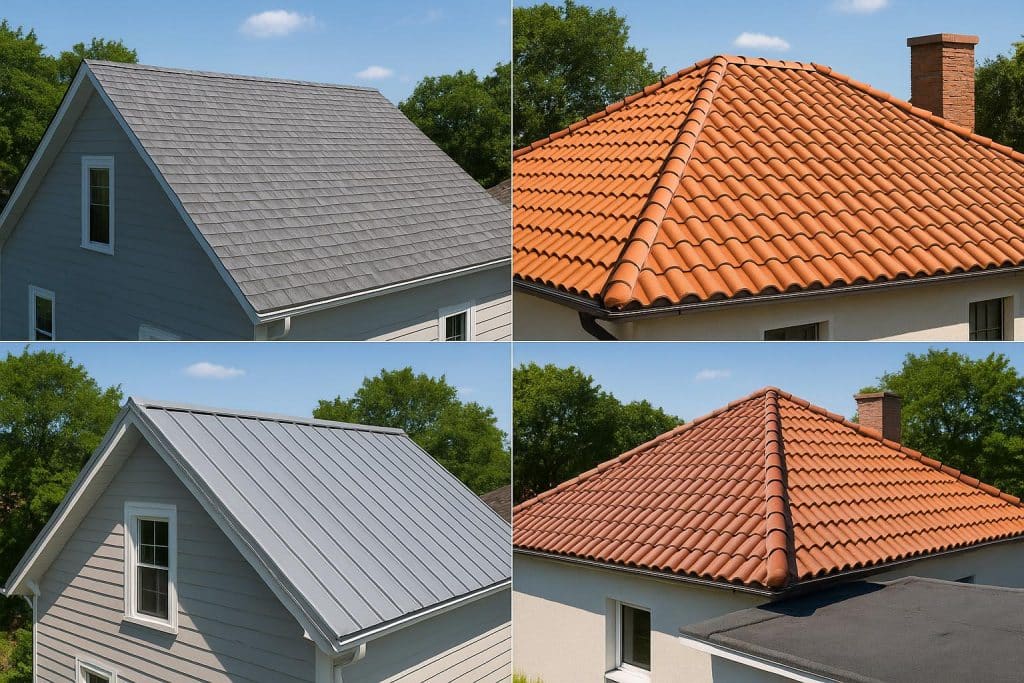
Getting a new roof is painful. You know it will be expensive. You just want to figure out what material makes sense for your climate and budget without sitting through a three-hour sales pitch in your living room. Roofing contractors often push whatever material they get the best wholesale rate on. That does not mean it is right for your specific house.
We are going to skip the fluff. Here is the objective data on residential roofing materials so you can make a calculated decision.
| Material | Real-World Lifespan | Cost Profile | Best Application |
|---|---|---|---|
| Asphalt Shingles | 15 to 30 years | Low to Medium | Standard residential budgets |
| Standing Seam Metal | 40 to 70 years | High | Severe weather, energy efficiency |
| Synthetic / Composite | 30 to 50 years | Medium to High | Slate aesthetics without the weight |
| Slate and Clay | 75 to 100+ years | Very High | Historic homes, lifetime investments |
| Wood Shakes | 20 to 40 years | Medium to High | Mild climates, rustic architecture |
Asphalt Shingles
Look at any subdivision built after 1990 and you will see asphalt. It dominates the market for one specific reason. It is cheap. You generally pick between standard 3-tab shingles (flat and flimsy) and architectural shingles (thicker with a layered look).
Pros:
- Very affordable upfront installation.
- Easy to patch. Your local hardware store carries the supplies.
- Available in hundreds of color variations.
Cons:
- They just do not last. You are looking at 15 to 20 years before the granules start washing into your gutters.
- Highly vulnerable to wind uplift and hail strikes.
- Terrible for the environment (they pile up in landfills).
If you plan to move in four years, asphalt is the logical financial play. If this is your forever home, the long-term math changes.
Metal Roofing
Standing seam metal used to be reserved for agricultural barns. Now it is a staple on high-end residential builds.
Pros:
- You will probably die before this roof needs replacing.
- It reflects summer sun. This can drop your air conditioning bills by up to 25 percent.
- Snow slides right off instead of forming damaging ice dams.
Cons:
- The initial quote will give you sticker shock. Expect to pay double what you would for asphalt.
- It can be loud during heavy rainstorms (though solid attic insulation usually fixes this).
- Large hail can leave cosmetic dents.
Slate and Clay Tiles
This is legacy roofing territory. Slate is literally natural rock. Clay is baked earth. They belong on generational estates.
Pros:
- Fireproof. Rot-proof. Bug-proof.
- Will easily last a century.
Cons:
- Extremely heavy. Your roof deck probably needs expensive structural reinforcement just to hold the weight.
- You cannot just walk on it to clean your gutters. Step on a tile wrong and it cracks.
Composite (Synthetic) Roofing
These are dense plastic and rubber compounds stamped in molds to perfectly mimic cedar or slate.
Pros:
- Gives you the luxury slate look without requiring structural reinforcements.
- Highly impact resistant against falling branches and hail.
Cons:
- The material has not been around long enough to truly prove those 50-year lifespan claims in the real world.
- Still carries a premium price tag.
Wood Shakes
Usually cut from cedar. They offer a beautiful, natural texture that synthetics still struggle to duplicate perfectly.
Pros:
- Excellent natural insulation properties.
- Weathers over the years to a highly sought-after silver color.
Cons:
- Very high maintenance. You have to actively clear debris to prevent moss and moisture rot.
- If you live in a wildfire zone, insurance companies might refuse to cover your home unless the wood is heavily treated with chemical retardants.
The Installation Variable
The actual material you buy only matters if the person nailing it down knows what they are doing. A 50-year shingle installed poorly will leak in five years.
Climate dictates installation methods. If you live in Northeast Ohio, you need an installer who understands how rapid freeze-thaw cycles rip apart weak flashing. Finding reliable roofing companies canton means getting a crew that knows exactly how local weather destroys bad workmanship. Vet your contractors thoroughly. Check their specific manufacturer certifications. Do not just blindly accept the lowest bid.
The absolute most expensive roof you can buy is the one you are forced to pay for twice.


Angela Spearman is a journalist at EzineMark who enjoys writing about the latest trending technology and business news.