


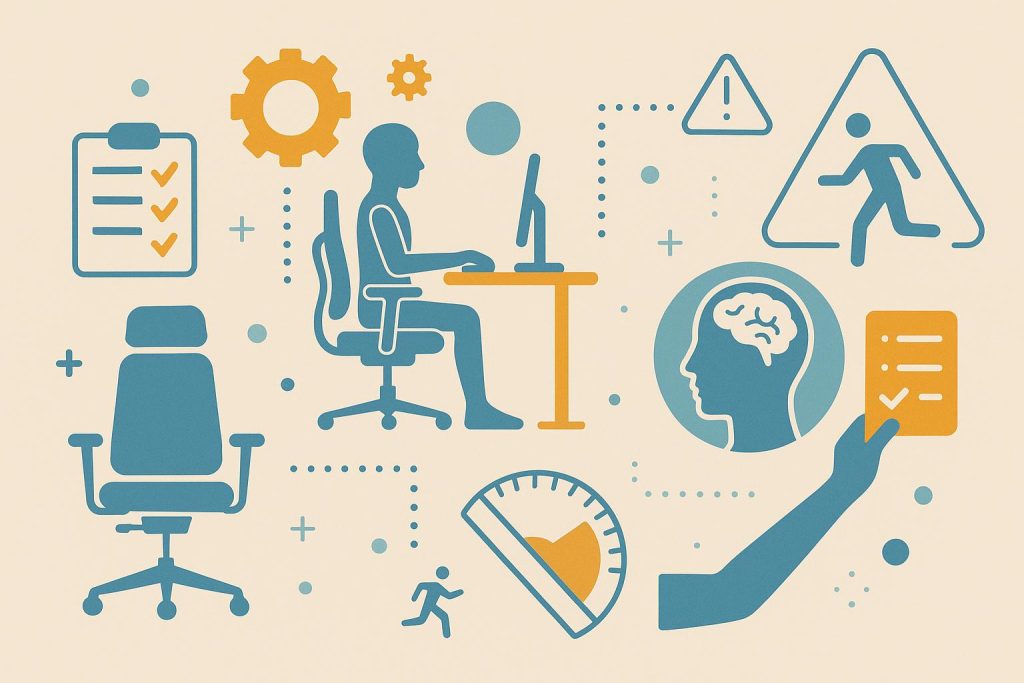
Human Factors Engineering/Ergonomics is a scientific discipline focusing on how people interact with elements of a system.
Want to learn more about essential ergonomics and Human Factors Engineering (HFE), and how to integrate it into your Lucerne Grand workspace? Let’s read on!
What is Ergonomics?
The word ergonomics, meaning “the science of work” in Greek, is derived from the Greek words ergon (which means work) and nomos (which means laws). This practice, borrowed by the IEA in the 2000s, helps us to understand interactions between people and different elements of a system, such as theory, principles, methods, and data, in order to optimize better human well-being and stronger overall system performance.
Exact Definition/Meaning
The word ergonomics mean different 2 things depending on usage, these being:
- An applied disciplinary science practice concerned with arranging and designing things for other people and yourself so that humans can interact with these systems most safely and efficiently
- The design characteristics of an object specifically coming from the application of the science of ergonomics.
Types of Ergonomics
There are many kinds of ergonomic practices, but we will be focusing on these three main types of Human Factors Engineering:
- Physical Ergonomics: This focuses on human anatomical, anthropometric, biomechanical, and physiological characteristics that help with healthy physical activity. Examples include proper posture, repetitive movements, and physical safety/health.
- Cognitive Ergonomics: This focuses on cognitive, or mental processes like memory, reasoning, and perception that aid in better mental health. Examples include mental training, decision-making, and human-computer (or other people) interactions.
- Organizational ergonomics: This focuses on the organization of sociotechnical systems, like policies, processes, and structures. Examples include communication, teamwork, and telework.
Core Principles of Ergonomics
- Systemic Approach: A systemic approach is viewing the entire environment around you: the people, equipment, and organizational cultures- not looking at individual parts or places.
- Design Driven: Shaping the environment and tools to avoid complications and issues in the future.
- Double Outcomes: The main goal is to upgrade both human comfort/safety and performance/productivity for the best possible results.
The Purpose of Ergonomics
The main purpose of ergonomics is to increase human safety and health, systemic performance, and human well-being. Studies have shown that consistent practices of these vital scientific disciplines are linked to greater overall quality of life and reduce long-term issues and complications.


Angela Spearman is a journalist at EzineMark who enjoys writing about the latest trending technology and business news.