


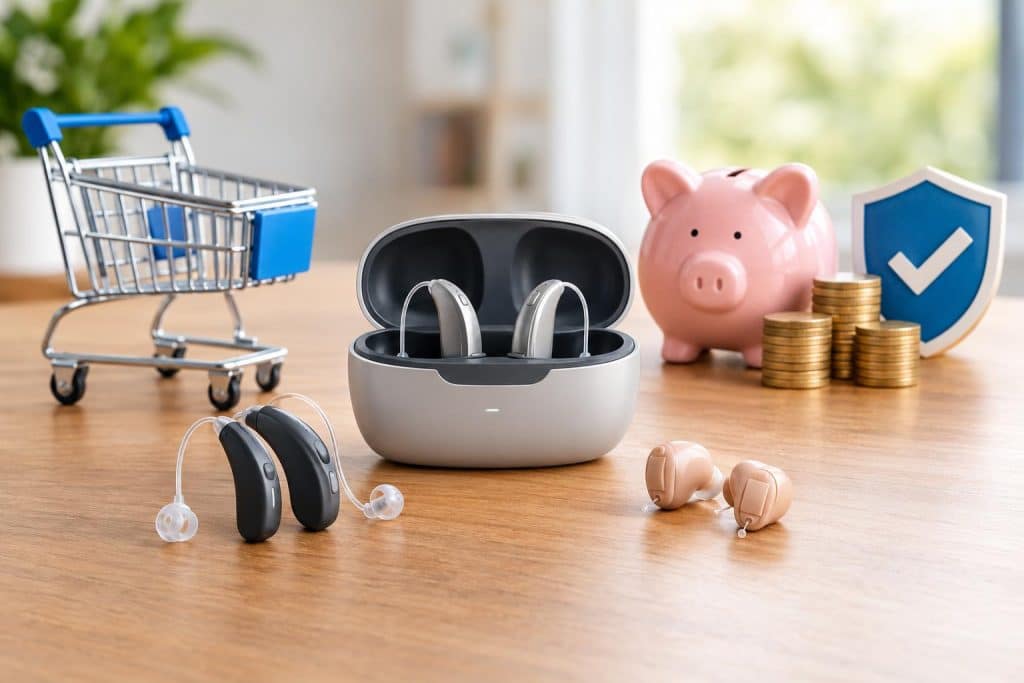
Key Takeaways
Wholesale options for hearing aids can provide considerable savings; consumers might save as much as 30% compared to traditional retail prices when they purchase from authorized online retailers.
Prescription hearing aids deliver customized solutions tailored to individual hearing profiles, while over-the-counter alternatives are often more affordable yet typically lack the necessary customization for severe hearing loss.
When shopping for hearing aids, comparing prices and warranty terms can lead to enhanced savings; potential buyers should also evaluate customer support along with additional features when making a final decision.
Selecting authorized dealers is fundamental in ensuring both the authenticity and quality of hearing aids; verifying a retailer’s status via manufacturer websites or reviewing warranty and return policies is crucial.
Strong customer support is vital in the hearing aid purchasing journey, as it assists with product selection and offers help with adjustments and technical difficulties.
Modern hearing aids boast features such as Bluetooth connectivity, rechargeable batteries, and sleek designs, which improve usability and cater to aesthetic preferences.
Purchasing hearing aids online can be efficient by researching different brands, consulting with audiologists, and understanding shipping and return policies, thus creating a more satisfying shopping experience.
Maximizing Savings: The Best Places to Buy Hearing Aids Online
Uncovering Wholesale Options for Premium Brands
The financial landscape of hearing aids can be intimidating. Prices vary significantly, often leaving consumers feeling confused. However, knowing where to look can lead to remarkable savings. Wholesale options are particularly appealing for those seeking premium brands without exorbitant costs. Online retailers like Wholesale Hearing Direct position themselves as strong contenders, emphasizing quality devices at competitive prices by eliminating unnecessary middlemen found in the traditional retail framework.
Research indicates that many consumers end up paying as much as 30% more for hearing aids through conventional supply channels. Buying directly from wholesale retailers reduces expenses considerably, allowing access to devices from reputable manufacturers like Phonak and Oticon. Renowned for reliability and cutting-edge technology, these brands help clients uncover savings that may amount to hundreds or even thousands of dollars.
Understanding Prescription vs. Over-the-Counter Hearing Aids
The hearing aid market features both prescription and over-the-counter choices. Deciding between them can be transformative. Prescription hearing aids are custom-fitted to meet individual hearing profiles, often backed by professional assessments that yield devices specifically calibrated for users’ unique needs. Conversely, over-the-counter hearing aids are typically more budget-friendly, providing generic solutions suitable for those with milder hearing impairments.
Yet, what’s the downside? Over-the-counter options may lack the fine-tuning available with prescription hearing aids. Individuals and their families might ask, “where can i buy hearing aids that fit perfectly?” Those requiring personalized solutions will likely gravitate towards prescription models, ensuring all aspects of their hearing loss are effectively addressed.
Comparing Prices and Offers: What to Look For
- Look for manufacturer promotions: Brands like ReSound sometimes provide retailer incentives.
- Examine pricing structures: Subscription models in the hearing aid sector might yield long-term savings.
- Review warranty conditions: A more extended warranty period can often signify superior product quality.
Each element plays a vital part in ensuring consumers get the most value for their money. Comparing prices involves more than just seeking the lowest cost; it necessitates a thorough evaluation of various factors, including support and features in the overall decision-making spectrum.
The Quality Assurance Factor: How to Choose Trusted Retailers
Spotting Authorized Dealers for Leading Hearing Aid Brands
When selecting a retailer, quality assurance becomes paramount. Purchasing hearing aids from authorized dealers is essential for guaranteeing authenticity. Identifying these dealers offers peace of mind, as they’ve forged relationships with top brands and ensure the products are genuine and uncompromised in quality.
Clients often wonder how to verify authorized dealers. A solid strategy is to visit the official website of the manufacturer, as most brands maintain lists of certified retailers. However, this is not the only approach. Consumers can also scrutinize warranties and return policies disclosed by the retailers. Authorized dealers typically provide superior support concerning potential issues in the future.
Evaluating Customer Support: A Non-Negotiable Element
The level of customer service can significantly influence the purchasing experience, determining whether it leans positive or negative. How a retailer responds to inquiries and supports clients after a purchase speaks volumes about their dedication to quality. Effective customer support should encompass everything from selecting the right product to offering post-sale assistance. It’s advisable to look for companies that connect users with audiologists or licensed professionals ready to address questions. This support proves crucial, especially when navigating technical issues or fine-tuning devices.
- 24/7 support availability: Retailers providing assistance at all hours tend to be more reliable.
- Variety of contact options: Multiple communication channels often reflect a customer-centric approach.
- Professional programming assistance: This guarantees customers can access expert tuning adjustments as needed.
Dependable customer support creates a trusting relationship between the retailer and the buyer. Such support is essential as clients adapt to new hearing aids, ensuring they feel confident and informed throughout the process.
Reading Reviews and Testimonials: Making Informed Decisions
In today’s digital landscape, endless avenues exist to gauge vendor credibility. Online reviews and testimonials frequently shed light on customer satisfaction. Prospective buyers should explore forums, social media, and review websites for genuine customer feedback. Authentic reviews can reveal both highlights and drawbacks of various products.
But don’t stop there. Seek out:
- Expert assessments: Industry professionals often provide detailed evaluations of devices.
- Comparison platforms: These can offer side-by-side analyses of features, pricing, and user experiences.
- Consumer reports: These publications allow potential purchasers to see how products perform in real-life situations.
Sound decision-making hinges on diverse perspectives. Compiling insights helps consumers avoid potentially regrettable choices by understanding others’ experiences.
Features to Consider: Finding the Right Hearing Aid for Your Needs
Bluetooth Connectivity and Other Must-Have Technologies
Technology is essential in the latest hearing aids. The demand for Bluetooth connectivity continues to rise. This feature allows users to stream music, phone calls, and other audio, improving the integration between technology and everyday life. Nowadays, many clients look for hearing aids that seamlessly connect with smartphones, tablets, and televisions. It’s all about making life easier.
But Bluetooth isn’t the only game-changer. Consider additional technological features as well. Noise-cancellation capabilities, real-time adjustments, and directional microphones significantly enrich the listening experience. Users can personalize their listening environments, making the devices adaptable to various scenarios.
Rechargeable Options: Convenience Meets Functionality
Rechargeable hearing aids represent a revolutionary shift in user experience. Many individuals switching from traditional battery-operated models truly appreciate the convenience of this advancement. No more hassle with tiny batteries or the constant worry about replacements. With rechargeable options, users simply place their devices on a dock overnight, waking up to a fully charged unit ready for the day.
- Extended battery life: Rechargeable models frequently offer longer usage times.
- Environmental friendly: Lesser battery waste contributes positively to sustainability.
- Consistent performance: Rechargeable devices usually deliver optimal operation throughout the day.
This user-centric feature continues to enhance the lifestyle factor, making hearing aids more attractive to those hesitant about earlier models.
Invisible Hearing Aids: Discretion Without Compromise
Aesthetics are essential for many clients alongside functionality. The demand for invisible hearing aids has surged, especially among younger users or those conscious of visibility. These devices incorporate advanced technology while maintaining discretion. They offer performance that rivals larger models but compact it into a design that avoids drawing attention.
However, choosing a discreet device that is also effective necessitates understanding potential limitations. Invisible aids may lack specific features found in larger models. It is vital to ensure they fit personal hearing requirements, so a light consultation with an audiologist can help steer choices. Open discussions about expectations are essential for clients to find the right equilibrium.
Streamlined Shopping Experience: What to Expect When Buying Online
Working through the Online Purchase Process: A Step-by-Step Guide
Online shopping for hearing aids can initially seem daunting. Yet, a simplified process often leads to substantial savings. Numerous companies strive to guide consumers through each phase. Here’s how to break it down:
- Research: Gather information on potential brands and models tailored to individual needs.
- Consult: Interact with audiologists or customer support for advice tailored to personal conditions.
- Compare: Assess features, prices, and customer feedback across different retailers.
- Purchase: Complete the transaction, ensuring all terms are clear and understood.
- Setup: Follow the provided instructions for optimal setup and adjustments of hearing aids.
Engaging in this process can assist buyers in transforming what might be overwhelming into a (more) manageable and rewarding experience. Users often express high satisfaction when they feel well-informed and engaged in their purchases.
Expert Guidance and Custom Programming for Optimal Results
Online retailers are increasingly providing personalized programming options to complement purchases. What does this entail? Tailored professional guidance based on individual hearing profiles. Users can anticipate expert assistance in fine-tuning settings tailored to their lifestyles, frequency needs, and levels of hearing loss. With access to audiologists or trained specialists throughout the purchasing process, user satisfaction tends to improve significantly.
This personal touch leaves many customers feeling supported, especially during the adjustment phase. They don’t have to navigate this space solo; help and resources are just a click away.
Ensuring Nationwide Shipping and Easy Returns: What Buyers Should Know
When buying online, understanding shipping and return policies can significantly impact the experience. Many reputable retailers now provide nationwide shipping, ensuring convenience for clients across varying locations. This means that products reach customers promptly, avoiding local availability challenges.
- Look for straightforward return policies: If the product does not meet expectations, the return process should be simple.
- Check shipping costs: They tend to be included in the final price but should remain transparent.
- Consider delivery times: Quick shipping is instrumental for immediate requirements.
Having a clear understanding of these elements offers reassurance to potential buyers. Knowing there are flexible options makes the purchasing decision feel far more secure.
FAQ
What should consumers consider when choosing between online and in-store purchases?
Consumers often balance convenience with the desire for personal interaction. Online choices frequently present better deals and wider selections, while in-store purchases provide immediate support but may carry higher prices. Ultimately, individual preferences and comfort levels with technology usually determine the best option.
How can users ensure they get the best warranty on hearing aids?
Reading the fine print is essential. Numerous manufacturers offer extended warranties covering various issues, indicating the reliability of their products. Clients should look for warranties incorporating both loss and damage coverage for added peace of mind.
What features should first-time buyers prioritize?
First-time buyers ought to focus on comfort and ease of use. Features such as Bluetooth connectivity and rechargeable batteries can enhance daily convenience. It’s also wise to consider noise-canceling capabilities and user-friendly controls for a smoother experience overall.
Are temporary adjustments to hearing aids easy to make?
Yes, most modern hearing aids come equipped with adjustable settings. Users can frequently make minor tweaks through companion apps or with professional assistance. Familiarizing oneself with these functionalities significantly enhances listening experiences.
What makes a brand’s reputation important in the hearing aid market?
A solid brand reputation generally signifies quality and dependability. Established brands often invest in research and development, delivering the latest technology. Consumers can expect robust performance and responsive customer service when choosing well-regarded manufacturers.
Do hearing aids require regular maintenance?
Absolutely, routine maintenance is essential for longevity. Users typically need to clean devices and replace filters regularly. Engaging with customer support for maintenance tips can help avert performance issues down the road.
How can clients stay informed about the latest technologies in hearing aids?
Staying connected with hearing health forums, trade publications, and brand newsletters is vital. These resources offer insights into emerging trends and new features. Additionally, participating in workshops or webinars led by professionals can expand knowledge about advancements.
What role does audiologist involvement play in the buying process?
Audiologists play an indispensable role, providing recommendations based on comprehensive hearing assessments. Their expertise ensures clients select devices aligned with their unique hearing profiles. Joint efforts between clients and audiologists significantly enhance overall satisfaction and product effectiveness.


Angela Spearman is a journalist at EzineMark who enjoys writing about the latest trending technology and business news.