


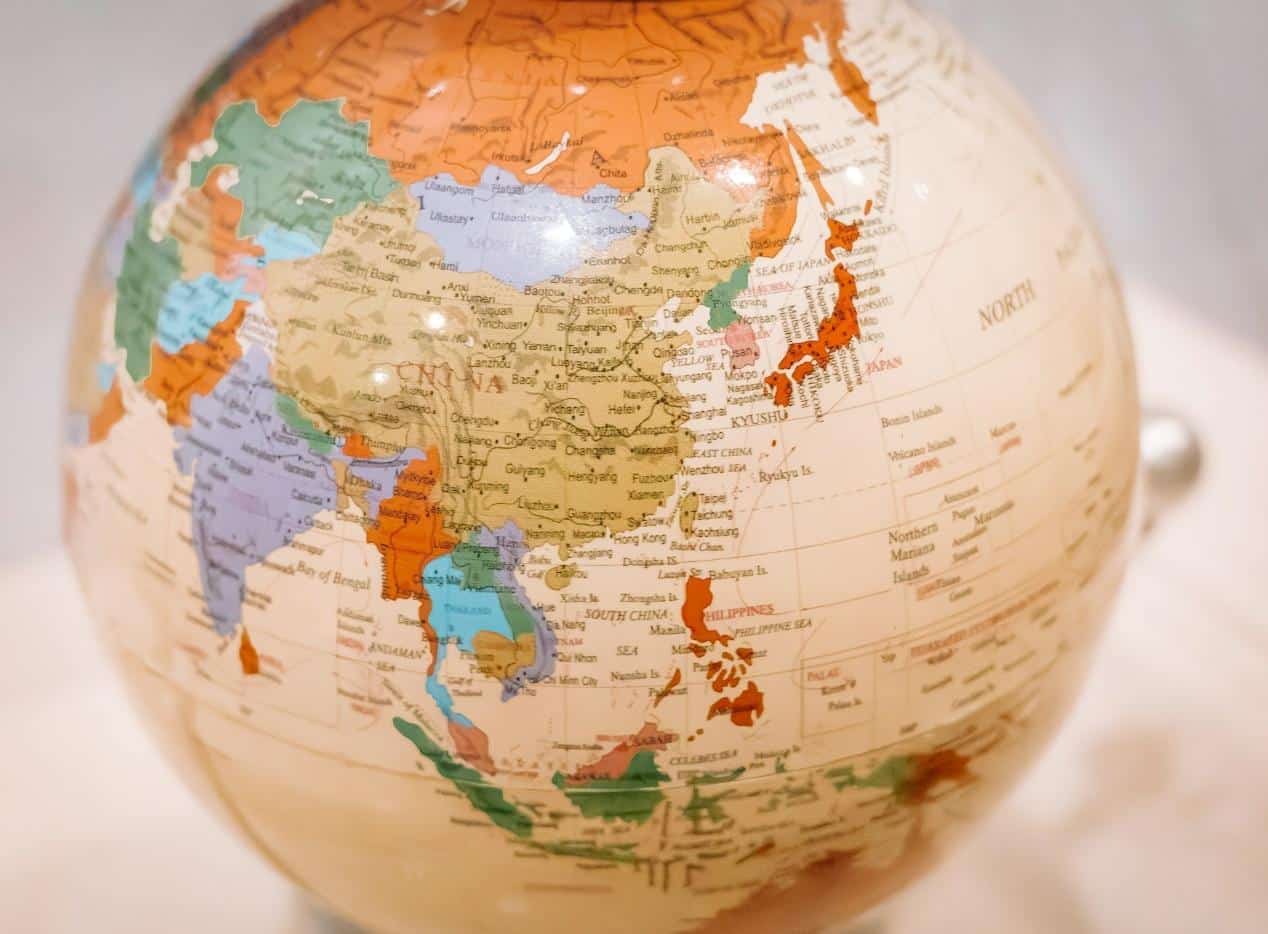
Few bilateral relationships carry as much historical weight — or as much unresolved tension — as the one between South Korea and Japan. Colonization, forced labor, wartime sexual slavery, territorial disputes, and clashing national narratives all sit beneath a modern partnership that is also deeply intertwined through trade, security, and pop culture.
Understanding this relationship means grappling with a central, difficult question: how do two nations remember the same past so differently, and what would genuine reconciliation require?
The eight books below span diplomatic history, colonial studies, memory politics, gender history, national identity, and cultural exchange. Together, they provide a more complete picture of how Korea–Japan relations developed, and why they remain so difficult to resolve.
1. The Burden of the Past: Problems of Historical Perception in Japan-Korea Relations — Kan Kimura
Kan Kimura’s The Burden of the Past is one of the most direct and useful books for understanding why historical disputes continue to dominate relations between Japan and South Korea.
Kimura examines how issues that were once treated as manageable diplomatic disagreements gradually became central questions of national identity. He traces the development of controversies surrounding colonial rule, compensation, apologies, history education, and political responsibility, showing how domestic changes in both countries intensified the conflict over memory.
Rather than treating Korea–Japan tensions as the inevitable result of an unresolved past, Kimura explains how political institutions, public opinion, activism, and changing national narratives transformed that past into an increasingly powerful diplomatic burden.
For readers looking for one book that connects history, memory, and contemporary politics, this is the strongest overall starting point.
2. History Textbooks and the Wars in Asia: Divided Memories — edited by Gi-Wook Shin and Daniel C. Sneider
Few issues illustrate the persistence of historical conflict more clearly than the way nations teach the past. This edited volume compares how textbooks in Japan, South Korea, China, Taiwan, and the United States describe major events of the twentieth century. By placing national narratives side by side, the contributors show how education systems select, emphasize, soften, or omit different aspects of war and colonialism.
The chapters reveal that textbook disputes are not simply arguments over factual accuracy. They are also struggles over national identity, victimhood, responsibility, and the political meaning of history.
For readers interested in reconciliation, this book provides one of the clearest explanations of why a shared historical narrative remains so difficult to achieve. It also demonstrates how disagreements learned in classrooms can shape public opinion and foreign policy for generations.
3. The Japan–South Korea Identity Clash: East Asian Security and the United States — Brad Glosserman and Scott A. Snyder
Despite sharing democratic institutions, close economic ties, and major security concerns, Japan and South Korea have repeatedly struggled to build a stable partnership. Brad Glosserman and Scott A. Snyder argue that the central obstacle is not simply policy disagreement but a deeper clash between national identities.
The book examines how Japanese and South Korean citizens view themselves, each other, and their respective places in East Asia. It also considers how public opinion, political leadership, historical grievances, and the role of the United States affect bilateral cooperation.
Its strongest contribution is its explanation of why strategic logic alone has not been enough to overcome mistrust. Even when Japan and South Korea face common threats, identity-based disputes can prevent sustained collaboration.
This is an essential read for anyone interested in modern diplomacy, regional security, or the persistent gap between the two countries’ shared interests and their often-fractured political relationship.
4. Troubled Apologies Among Japan, Korea, and the United States — Alexis Dudden
Official apologies are often presented as possible solutions to historical conflict, but Alexis Dudden shows that apologies are never merely symbolic statements. They are political acts shaped by questions of power, legitimacy, responsibility, and national identity.
Troubled Apologies Among Japan, Korea, and the United States examines how the language of apology developed within the postwar relationship between Japan and Korea. It also explores the role of the United States in constructing the political order that emerged after the end of the Japanese empire.
Dudden demonstrates why repeated apologies have frequently failed to settle historical disputes. Different governments, activists, and communities interpret the same statements in radically different ways, while carefully chosen language can acknowledge suffering without fully accepting legal or political responsibility.
The book is particularly valuable for readers interested in reconciliation efforts and the reasons diplomatic gestures so often fail to produce lasting trust.
5. Intimate Empire: Collaboration and Colonial Modernity in Korea and Japan — Nayoung Aimee Kwon
Relations between Korea and Japan during the colonial period cannot be understood solely through government policy and military power. They were also shaped through literature, translation, education, cultural collaboration, and personal relationships.
In Intimate Empire, Nayoung Aimee Kwon examines the cultural and intellectual connections that developed between Korean and Japanese writers under colonial rule. The book explores the morally and politically complicated position of Korean intellectuals who worked within Japanese imperial institutions while also attempting to preserve, negotiate, or redefine Korean identity.
Kwon challenges simple divisions between resistance and collaboration. Instead, she shows how colonial power operated through intimate cultural relationships in which language, ambition, creativity, and coercion were deeply entangled.
This is a strong choice for readers interested in literature, cultural history, colonial identity, and the less visible ways empires shape the lives and choices of the people living within them.
6. The Comfort Women: Sexual Violence and Postcolonial Memory in Korea and Japan — C. Sarah Soh
The history of the comfort women system remains one of the most painful and politically charged issues in Korea–Japan relations.
C. Sarah Soh’s The Comfort Women examines the Japanese military system of sexual exploitation while also exploring how the issue has been remembered, represented, and politicized in the decades since the war.
Soh places survivor experiences within a broader analysis of colonialism, gender inequality, poverty, patriarchy, nationalism, and wartime mobilization. She also considers the roles played by recruiters, military authorities, governments, activists, and postwar civil society.
What distinguishes the book is its refusal to reduce the subject to a simple diplomatic dispute between two states. Soh treats the comfort women issue as both a system of wartime violence and a continuing struggle over gender, historical memory, and national identity.
It is especially valuable for readers seeking a serious and nuanced introduction to one of the central historical controversies affecting the relationship.
7. Comfort Women and Sex in the Battle Zone by Ikuhiko Hata
Historian Ikuhiko Hata’s book is a scholarly examination of the comfort women system, drawing on extensive archival research and primary sources. It critically analyzes the military’s role and the broader socio-political context of sexual slavery during the war.
Hata offers a conservative revisionist interpretation that emphasizes licensed prostitution, private recruiters and disputed testimony. The book compiles substantial documentation. It is most useful for readers studying the historiography and political controversy surrounding the issue.
This book is frequently cited in scholarly discussions and recommended for its thoroughness. It is essential reading for those interested in historiography and the politics of memory in East Asia.
8. Popular Culture and the Transformation of Japan–Korea Relations — edited by Rumi Sakamoto and Stephen Epstein
Political relations between Japan and South Korea are often dominated by disputes over colonial history. At the same time, cultural exchange between the two societies has expanded dramatically through music, television, film, fashion, food, tourism, and digital media.
Popular Culture and the Transformation of Japan–Korea Relations examines how these everyday cultural encounters complicate the traditional story of permanent hostility between the two countries.
The contributors explore how Japanese audiences engage with Korean popular culture, how Korean consumers respond to Japanese media, and how cultural products can reproduce national stereotypes while also creating new forms of familiarity and connection.
The book does not argue that popular culture can erase historical grievances. Instead, it shows that Korea–Japan relations take place on several levels at once. Government disputes may intensify even as younger generations continue to consume each other’s media, visit each other’s cities, and participate in shared cultural communities.
It is an important addition for readers who want to understand the relationship beyond colonial history and formal diplomacy.
Why These Perspectives Matter Together
These eight books provide a rich and varied exploration of South Korea-Japan relations, from detailed archival research and gendered postcolonial analysis to broad historical surveys and reconciliation efforts.
Together, these works equip readers with a well-rounded understanding of this complex and evolving relationship. They emphasize that South Korea-Japan relations cannot be understood solely through political or historical facts but require attention to how history is remembered, contested, and sometimes weaponized. By engaging with these books, readers can appreciate the multifaceted nature of reconciliation and the ongoing challenges that both countries face in building a peaceful future.

Angela Spearman is a journalist at EzineMark who enjoys writing about the latest trending technology and business news.
