


Jamiel Altaheri is an experienced law enforcement leader whose career spans more than two decades in the New York City Police Department and executive leadership as chief of police in Hamtramck, Michigan. His work has included overseeing departmental operations, advancing community trust initiatives, and implementing systems that improve accountability and transparency. With academic training from institutions such as Seton Hall University, John Jay College, the FBI National Academy, and the Naval Postgraduate School, Altaheri brings both practical and analytical perspectives to policing challenges. His experience with staffing models, operational oversight, and performance tracking directly informs how police leaders evaluate overtime usage. Understanding what police leaders look for when reviewing overtime reports requires insight into both field operations and administrative controls, areas where Altaheri has demonstrated consistent focus throughout his career.
What Police Leaders Look for When Reviewing Overtime Reports
Police departments often rely on paid overtime when officers must stay on duty beyond a scheduled shift to finish essential work. In many cities, overtime draws scrutiny because vacancies and rising totals can strain budgets. For chiefs and command staff, reviewing overtime helps confirm the extra hours reflect real operational need.
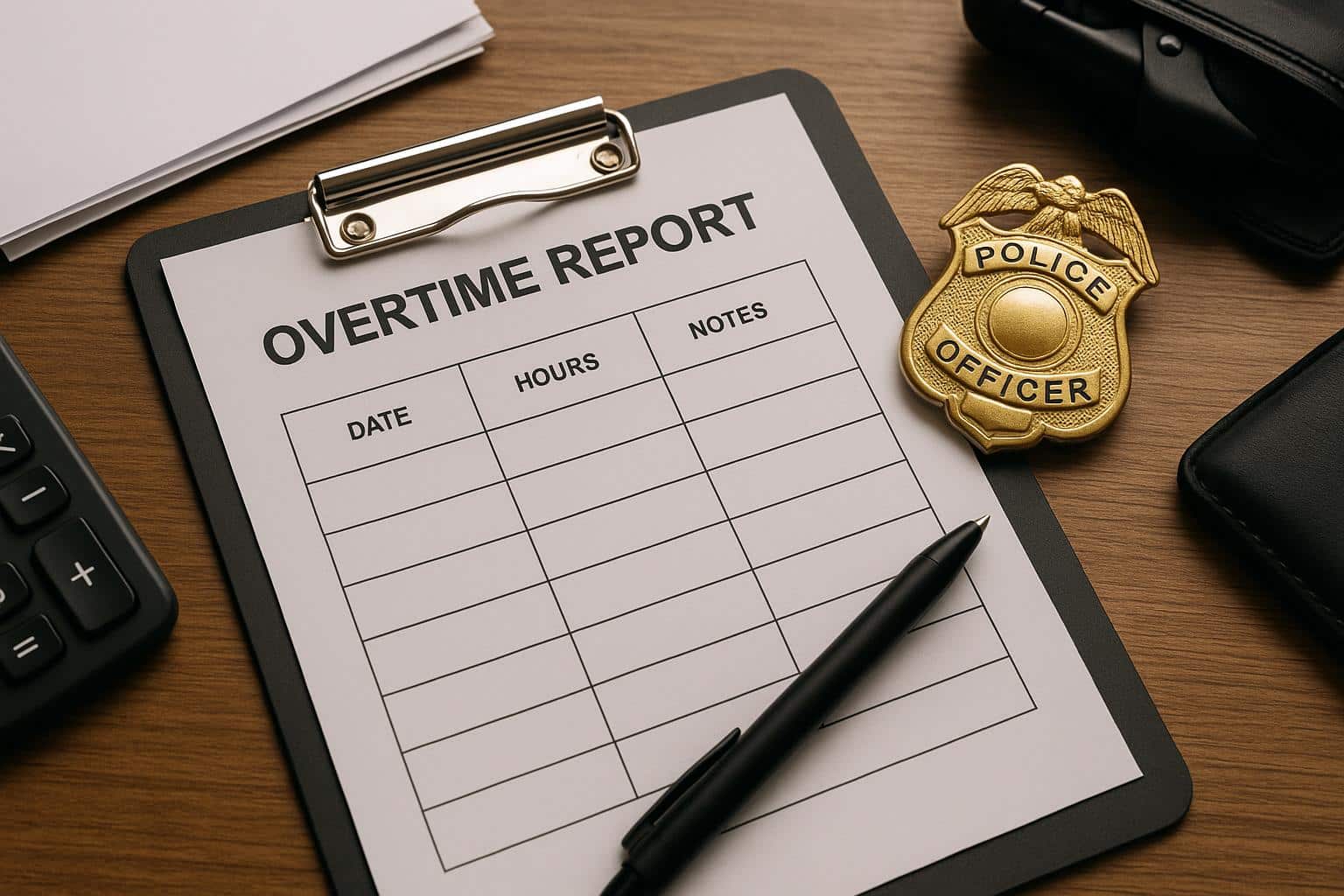
An overtime report provides the starting point for that review. It ties entries to details, such as who worked, the reason for the overtime, the number of hours recorded, and who approved it. Payroll staff use the record to confirm pay, and leaders use it to spot patterns across divisions. Leaders also watch for uncategorized entries, because they weaken oversight and trend analysis.
Leadership should start by reviewing overtime concentration. Leaders compare overtime totals across patrol, investigations, and specialized units to see which functions generate the most extra-hour demand. That view can point to coverage gaps or scheduling choices that affect daily deployment.
A second question is whether overtime occurs in the same places across multiple periods. When the same function requires extra hours across several reporting cycles, it can signal that a temporary surge has become sustained demand. Tracking that pattern helps leaders decide when a recurring workload may require additional staffing, schedule changes, or clearer workload triage.
Minimum staffing is often the bridge between schedules and overtime. Many departments use a staffing model to set minimum coverage for patrol shifts so the agency can respond to calls for service. When vacancies, sick leave, training, or other absences push a shift below that minimum, supervisors may approve overtime to backfill the gap or extend a shift to keep coverage.
Approval records deserve the same scrutiny as hour totals. Department policy commonly requires preapproval of overtime by a supervisor, or approval as soon as practical when prior approval is not possible. During review, the command staff looks for a clear operational reason, timely approval, and consistent categorization so overtime can be monitored and analyzed. If approvals are routinely late or required reviews lapse, leadership loses an early warning system for excessive overtime.
Operational explanations still matter, but leaders also look for corroboration. Court obligations, shift extensions to finish a call, and planned events can all create legitimate overruns. During review, supervisors compare the explanation with operational records, such as call activity, court obligations, or scheduling logs, to confirm that the entry reflects real work.
Reviews also check whether overtime use is approaching policy limits or creating fatigue risk. Departments often use audit-driven oversight to review hour limits, rest time between shifts, and unusually heavy overtime loads. When those checks lapse, leadership loses an early signal that overtime may be becoming excessive.
Once leaders understand why overtime is happening, they use the review to shape what happens next. Regular oversight can reinforce consistent timekeeping and make it easier to identify pressure points early. When leadership adjusts scheduled coverage or improves monitoring, departments can reduce avoidable overtime while still meeting service expectations.
Over time, overtime records reveal more than payroll totals. They can show where patrol coverage runs thin, where investigations regularly extend beyond scheduled hours, and where court obligations repeatedly pull officers away from patrol. When leaders study those signals, they gain a clearer picture of how the daily workload actually unfolds across the department. That perspective helps command staff adjust staffing plans before overtime becomes a permanent substitute for missing personnel.
About Jamiel Altaheri
Jamiel Altaheri is a veteran law enforcement professional who served more than 20 years with the New York City Police Department, rising to deputy inspector, and later became chief of police in Hamtramck, Michigan. His leadership has focused on operational oversight, community engagement, and organizational accountability. He has also contributed to initiatives supporting diversity in policing and strengthening community relationships. Altaheri holds advanced degrees and certifications from Seton Hall University, John Jay College, the FBI National Academy, and the Naval Postgraduate School.

Angela Spearman is a journalist at EzineMark who enjoys writing about the latest trending technology and business news.
