


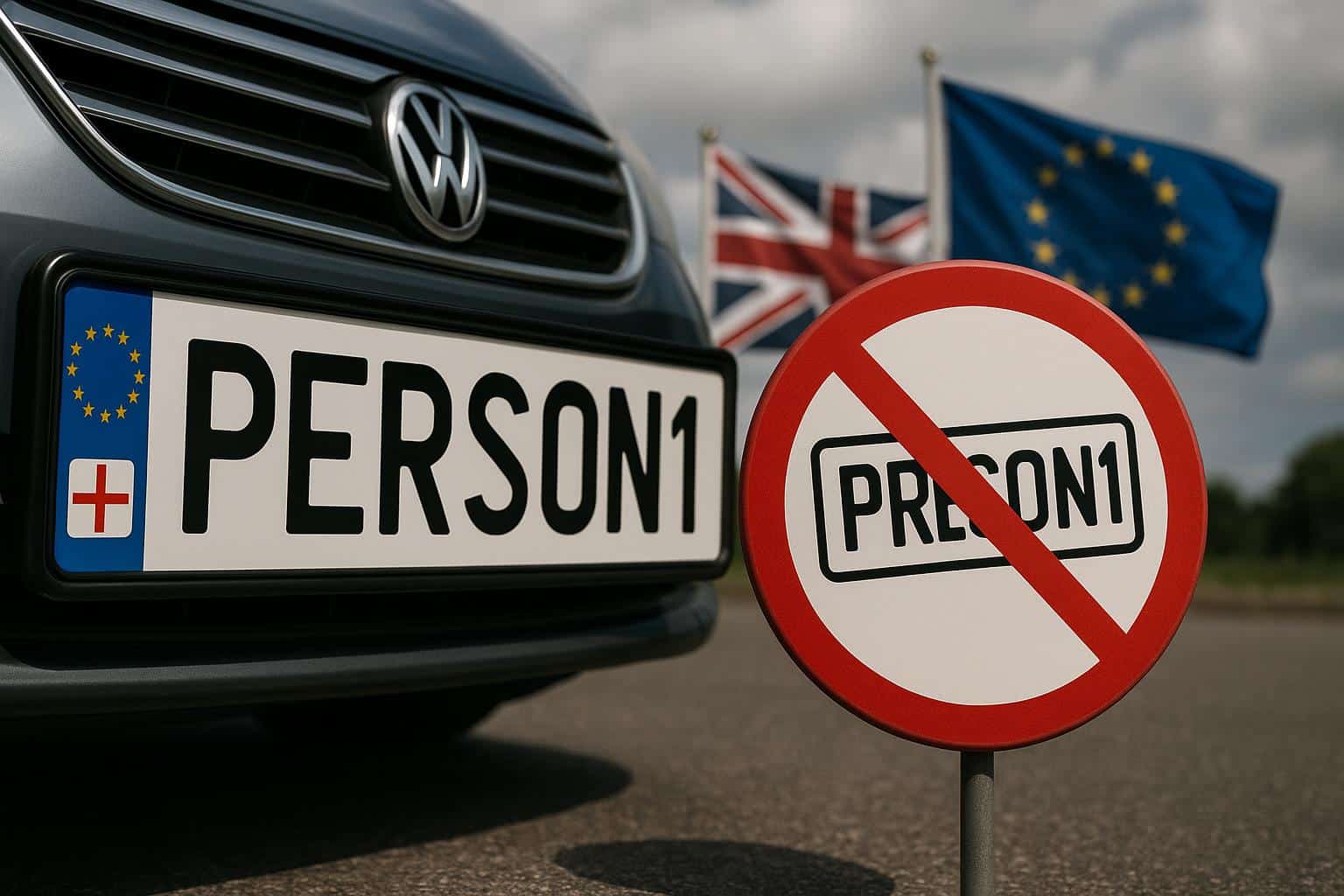
In many countries, the use of personalised licence plates is tightly controlled—or outright banned—due to concerns over offensive, controversial, or politically charged content. What might seem like harmless fun in one nation could easily provoke outrage or misinterpretation in another. Governments keen to avoid public backlash often restrict plates that reference religion, sexuality, violence, or historical traumas.
Customised plates can also stir debate in multicultural societies where symbols, words, or even numbers carry different meanings across cultures. For example, a plate considered cheeky in English might be deeply offensive in another language or dialect. As governments strive to promote harmony and avoid tension, they often err on the side of caution.
Safety and Security Considerations
Another common reason for rejecting custom plates is public safety. Some authorities argue that standardised plate formats help police and surveillance systems quickly identify vehicles. Custom registrations, particularly those using clever wordplay or visually ambiguous characters, can make that job more difficult—potentially delaying responses in serious incidents.
In regions where automated number plate recognition (ANPR) systems are used extensively, any deviation from expected patterns may reduce effectiveness. A plate like “L00K1T” may be eye-catching, but it could confuse traffic enforcement cameras or complicate witness descriptions during investigations. From a practical standpoint, uniformity often takes precedence over personalisation.
A Look at International Approaches
In the UK, personalised number plates are legal but come with boundaries. The Driver and Vehicle Licensing Agency (DVLA) has strict rules in place to prevent registrations that include anything offensive, aggressive, or politically sensitive. Their review panels meet twice a year to consider newly released combinations, ensuring that controversial or risqué letter-number patterns are filtered out before reaching the market.
Germany has taken even stricter action. Given its 20th-century history, any abbreviations tied to the Nazi regime—such as “SS,” “SA,” or “KZ”—are prohibited. Local authorities ensure these never appear on registrations, regardless of intent. The focus is on preserving national memory and avoiding unintentional offense, especially in public spaces.
Sweden adopts a similar yet slightly more flexible approach. Drivers can apply for plates with up to seven characters and renew them every ten years. However, Swedish authorities maintain a ban on any wording that might be deemed vulgar, offensive, or politically charged. Recent rejections have included words like “SEX” and even seemingly benign names like “TRUMP,” illustrating how the bar for acceptability can shift based on context.
A leading provider of custom UK plates, Regplates, notes that despite restrictions, demand for unique registrations remains strong. For many drivers, these plates are more than just a vanity statement—they’re seen as investments or personalised branding. Some plates can even increase a vehicle’s resale value. Still, the popularity of Regplates also puts the spotlight on the line between creativity and compliance. As more drivers chase originality, the likelihood of boundary-pushing requests grows.
In Hong Kong, personalised plates are highly desirable and often auctioned to the highest bidder. Drivers can request combinations of up to eight characters, provided they don’t use confusing letters like “I,” “O,” or “Q,” which resemble numbers and may cause misidentification. Despite those constraints, plates such as “1L0VEU” (a stylised version of “I LOVE YOU”) have sold for millions of Hong Kong dollars—highlighting the emotional and financial value tied to these identifiers.
Greece presents a different picture. While custom plates are not officially sanctioned, reports have surfaced of an underground market where unique plates are informally acquired. This practice has drawn criticism as a form of “conspicuous corruption,” where a select few gain access to symbols of status that are off-limits to the average citizen. It raises questions about fairness and transparency in vehicle registration systems.
Could the UK Tighten Its Rules?
As global attitudes shift and new sensitivities emerge, it’s possible that the UK may follow other countries in tightening its grip on custom registrations. While the DVLA already maintains a robust review system, increasing political polarisation, cultural awareness, and digital scrutiny could push authorities to broaden restrictions further.
Emerging trends such as the use of slang, internet memes, and cryptic references make the job of regulators even harder. A plate that slips through today could spark complaints tomorrow due to a sudden change in public sentiment or online interpretation. With social media capable of magnifying small controversies, governments may feel compelled to act pre-emptively.
There’s also the question of consistency. If one combination is rejected while a similar one is allowed, it can lead to public confusion or criticism. Transparency in the decision-making process—along with clearer guidelines—may become a priority for agencies like the DVLA as demand continues to grow.
The Road Ahead for Personalised Plates
Ultimately, personalised plates remain a popular form of expression for UK drivers, blending individuality with the nation’s love of motoring. However, they also serve as a reminder that freedom of expression on the road comes with boundaries. With cultural sensitivities evolving, and with digital technologies enabling closer monitoring of what’s visible in public, it’s likely that plate regulation will become even more nuanced in the years ahead.
For now, providers will continue to meet the appetite for creative vehicle registrations—but both buyers and sellers will need to stay mindful of the shifting lines between what’s clever and what’s unacceptable.

Angela Spearman is a journalist at EzineMark who enjoys writing about the latest trending technology and business news.
