


Working as an underwriter at a private credit firm in New York City, Daniel Selby reviews financing applications from small and medium-sized businesses and examines the supporting documentation behind each request. His work centers on assessing creditworthiness through tax filings, financial statements, and bank records, then recommending approval, revisions, or denial based on identified risk factors. Before moving into underwriting in March of 2025, he served as a private equity analyst focused on energy transition assets, where he built financial models and contributed to fundraising materials. He also completed internships with the Energy Futures Initiative Foundation and the Conservative Coalition for Climate Solutions in Washington, D.C. Selby studied economics at New York University, participated in the NYU Global Leadership Program, and helped lead student activities such as the Economics Society and the Pizza Club.
What Underwriters Look for in Private Credit Applications
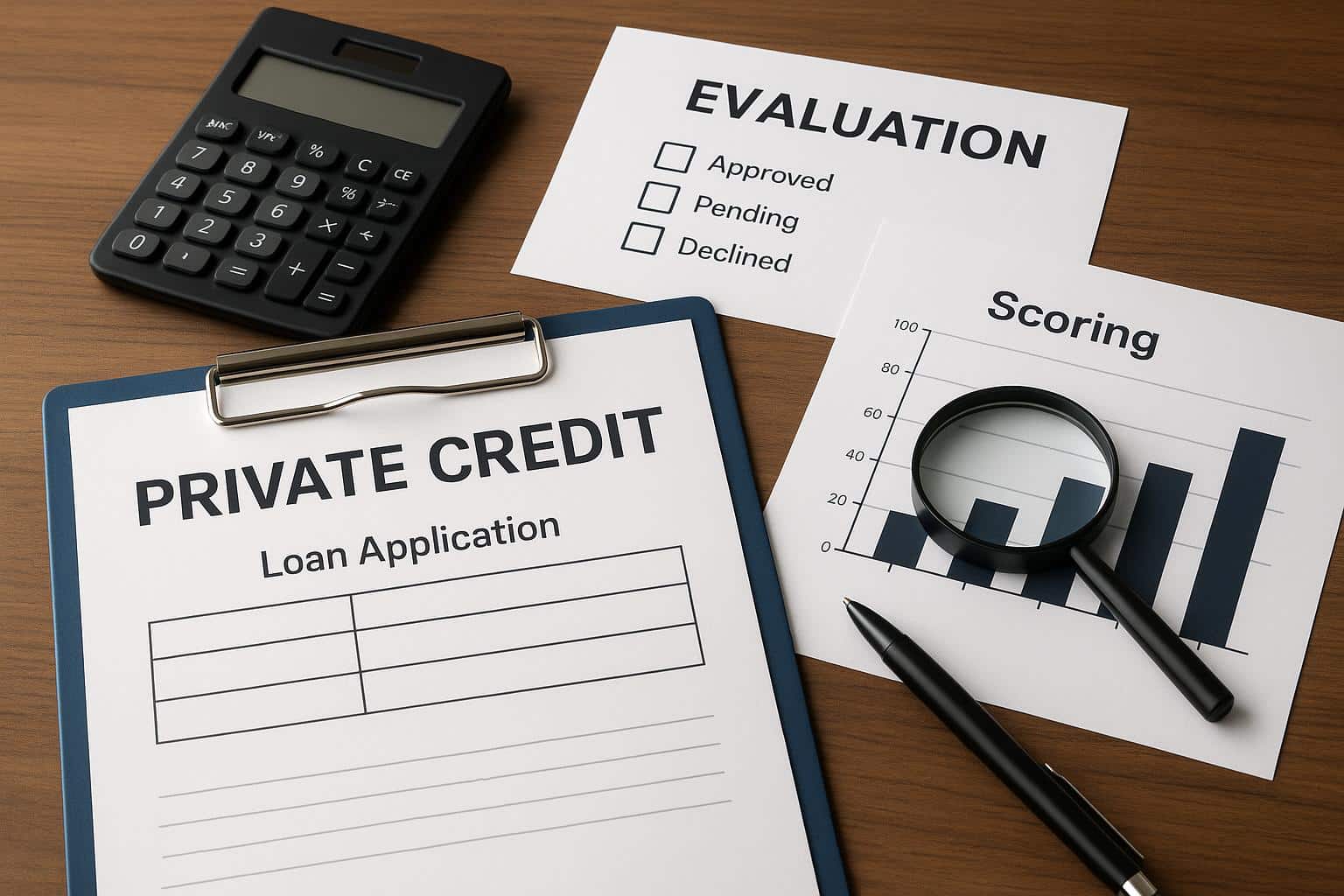
Private credit underwriters evaluate whether a business can realistically repay a loan and then structure terms to match that capacity. Unlike bank programs or public-market scoring, these firms review each application using direct documentation rather than general models. Their process follows a clear progression through financial records, collateral details, and repayment analysis.
The initial review focuses on a business’s core financials. Underwriters check tax filings, revenue patterns, and outstanding liabilities to assess solvency. Rather than projecting future growth, they evaluate whether current operations will support steady repayment. Investors might accept volatility in exchange for upside potential, but underwriters emphasize consistency.
This evaluation begins with financial statements, including income statements, balance sheets, and cash flow records. Underwriters cross-verify each figure against tax returns and bank statements, looking for alignment. If reported profits contrast with low cash balances, they flag the application for further review. For secured loans, they also assess collateral such as real estate, inventory, or receivables to confirm stable resale value.
Payment schedules must align with available cash. Even profitable companies can miss payments if income arrives irregularly or if costs spike during certain months. Underwriters analyze timing across revenue and expenses to identify whether standard terms will fit or require adjustment. This review reduces payment stress later in the term.
Many firms use automated underwriting platforms to streamline this process. These tools organize financial data, bring to light inconsistencies, and apply uniform benchmarks across submissions. Final credit decisions still rest with underwriters, who set terms and conditions after reviewing automated findings. Lenders that handle high volumes rely on automation to maintain consistency without cutting corners.
Underwriters increasingly supplement traditional scores with real-time cash-flow data pulled directly from linked bank accounts. These signals show how a business manages daily inflows and outflows, whether revenue depends on one client or many, and whether expenses creep ahead of income. By reviewing direct transaction data, underwriters can spot early warning signs such as rising overdraft fees or shrinking reserves that static statements might miss. This improves how they size and schedule repayment.
Sector conditions materially change risk. A company with locked-in contracts, like a logistics provider, presents different exposure than a retail store with changing foot traffic. Underwriters look at local market saturation, supply chain reliability, and regulatory shifts to contextualize what the numbers show. This is why two businesses with similar finances may receive different structures.
Some applications show warning signs early. Declining margins, irregular filings, or increasing debt prompt underwriters to revise the deal. They may shorten the term, adjust pricing, or require additional collateral as targeted responses to specific risks. These interventions aim to reduce uncertainty rather than halt a workable loan.
Underwriters and investors use similar data but take different approaches. Investors price uncertainty – underwriters reduce it with structural protections and documentation. The former can accept losses in pursuit of long-term value, while the latter calibrate terms to current capacity and verified records.
Even for strong applications, underwriters still adjust terms to match cash-flow patterns and sector context. They may reduce the loan amount, shift the payment schedule, or require a guarantor, a party who agrees to cover repayment if the borrower defaults.
As private credit expands, underwriters may shape how lending practices evolve beyond their own firms. Their methods for structuring risk with verified data, tailored terms, and scalable systems could influence other segments of private finance. By focusing on repayment behavior rather than predictive scoring, they reinforce an approach that rewards transparency and operational clarity over projections alone.
About Daniel Selby
An underwriter at a private credit firm in New York City, he evaluates financing submissions by reviewing credit profiles, tax documentation, and financial records, then recommending loan terms, revisions, or denial. Earlier, he worked as a private equity analyst focused on energy transition investments, developing financial models and fundraising materials. He also interned with Washington, D.C. think tanks, including the Energy Futures Initiative Foundation and the Conservative Coalition for Climate Solutions. He earned an economics degree from New York University and was selected for the NYU Global Leadership Program.

Angela Spearman is a journalist at EzineMark who enjoys writing about the latest trending technology and business news.
