


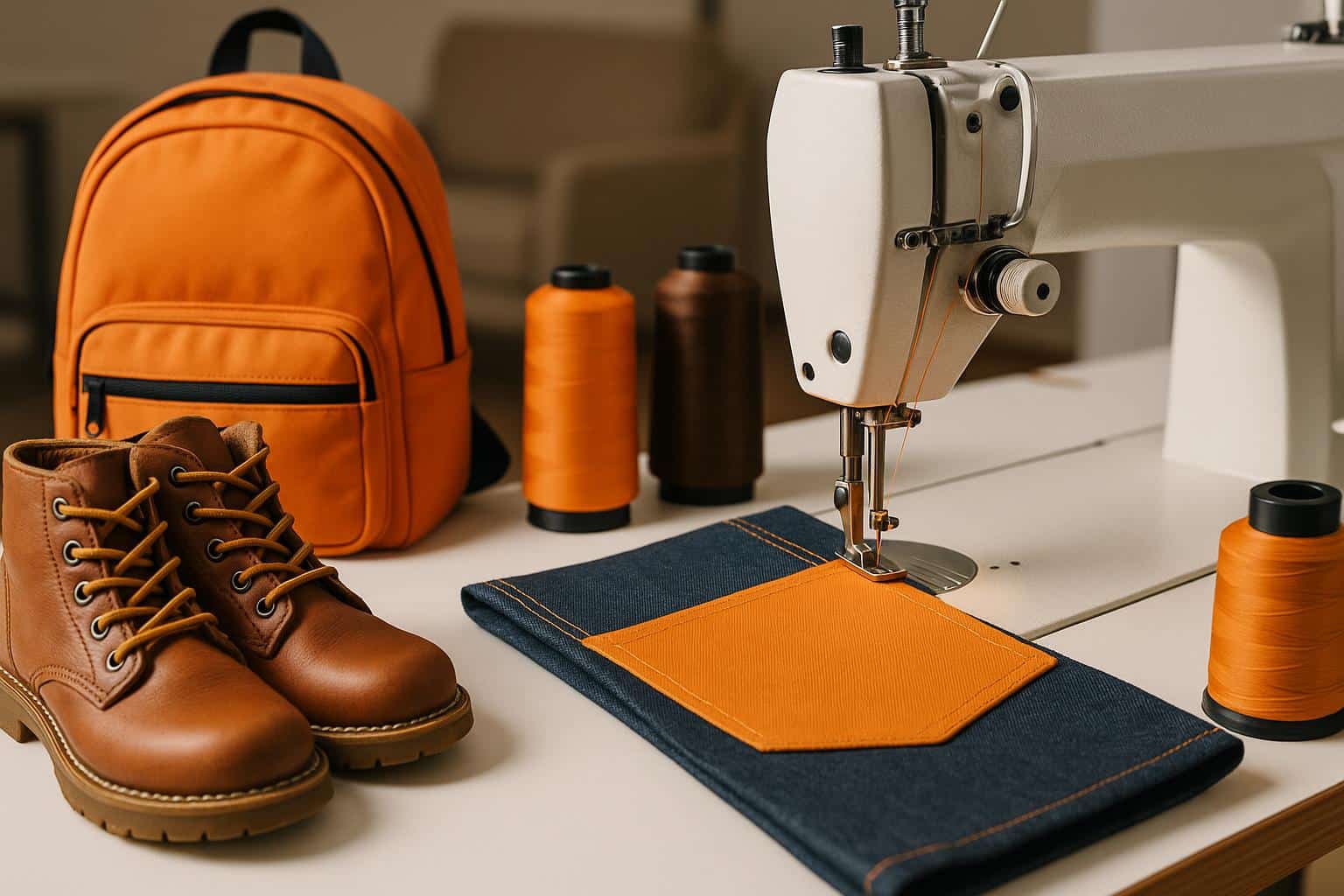
Walk through almost any modern environment — a hospital, a car, an airport, a campsite, a furniture showroom — and somewhere nearby is something that began life under the needle of an industrial sewing machine. These machines are the unsung workhorses of global manufacturing, built for speed, durability, and precision far beyond what a household machine could ever sustain. What makes them so versatile isn’t just raw power; it’s the huge ecosystem of specialist attachments, feet, and feed mechanisms engineered to handle materials and seam types that would defeat an ordinary machine entirely. This article looks at the breadth of products these machines create and the clever hardware available from companies like Atlanta Attachment Co. that makes each task possible.
Why Industrial Machines Are Different
Domestic sewing machines are designed for occasional, varied use on light fabrics. Industrial machines, by contrast, are built around a single task performed thousands of times a day: a lockstitch machine for straight seams, an overlock machine for finishing edges, a bartacker for reinforcing stress points. They run at far higher speeds, use heavier-duty motors and frames, and are typically table-mounted with a clutch or servo motor beneath. This specialization is precisely what allows manufacturers to bolt on dedicated attachments — because the machine isn’t being asked to do everything, the attachment can be optimized to do one thing extremely well.
Apparel and Fashion
The most familiar output of industrial sewing is clothing, but the category hides enormous variety. Lightweight lockstitch machines stitch shirts, blouses, and dress fabrics where seam appearance matters as much as strength. Heavy-duty walking-foot machines tackle denim, where multiple layers of stiff fabric need to feed evenly without one layer creeping ahead of another. Overlock and safety-stitch machines finish raw edges on knitwear and T-shirts so they don’t fray, while coverstitch machines create the flat, stretchy hems seen on the bottom of T-shirts and the seams of activewear. Tailoring relies on a different set of machines again: padding machines that fuse canvas interlinings into suit lapels, and buttonhole and button-sewing machines that would be painfully slow by hand at production scale.
Footwear and Leather Goods
Leather and synthetic uppers for shoes, boots, and bags are sewn on post-bed and cylinder-bed machines, where the bed of the machine is raised into a narrow column or column-and-arm shape so the operator can manoeuvre a three-dimensional shoe upper or bag panel around the needle rather than feeding flat fabric through a flatbed. These machines often pair with heavy needle-feed mechanisms, since leather doesn’t stretch and grip the way woven fabric does, and a positive feed system is needed to move it accurately under the needle.
Furniture, Mattresses, and Soft Furnishings
Sofas, armchairs, mattresses, curtains, and blinds all depend on industrial sewing. Upholstery work typically requires walking-foot or compound-feed machines because the layers — often foam, fabric, and a stiff backing — are uneven in thickness and would otherwise slip against each other. Long-arm quilting machines stitch the decorative patterns into mattress covers and duvets, sewing through thick layers of wadding in continuous, programmed paths. Curtain-making relies on specialist “header tape” attachments that fold and gather fabric at the top edge while simultaneously stitching in the tape that curtain hooks attach to — a task that would otherwise require several separate hand operations.
Automotive and Transport Interiors
Modern vehicles contain a surprising amount of sewn material: seat covers, headliners, door panels, seatbelts, and airbags. Seatbelt webbing is sewn with heavy bartack machines capable of stitching through multiple layers of high-tenacity polyester webbing at points where failure simply isn’t an option, often using bonded thread and multiple stitch passes for redundancy. Airbags require specialised zigzag and lockstitch machines that can sew gas-permeable seams precisely, since the seam pattern itself partly controls how the airbag inflates and vents. Car seat covers are sewn on machines fitted with piping or welting feet, which fold a strip of fabric around a cord and stitch it into the seam simultaneously, producing the rolled edge seen along seat bolsters.
Outdoor, Marine, and Technical Textiles
Tents, sailcloth, awnings, parachutes, and marine canvas are sewn on extra-heavy-duty walking-foot machines, frequently fed by large bobbins or even cone-fed bottom thread systems, because these products use thick, slippery synthetic fabrics like ripstop nylon, Cordura, and laminated sailcloth. Many of these machines run double or triple needles for added seam strength, and zigzag stitching is common because it allows a small amount of stretch without the seam cracking. Industrial filter bags, geotextile fabrics used in civil engineering, and conveyor belting are produced on similarly heavy machines, sometimes built specifically to handle felted or coated fabrics that would gum up a standard presser foot.
Medical, Protective, and Hygiene Products
Surgical gowns, scrub uniforms, isolation gowns, and many types of personal protective equipment are produced on industrial machines fitted with specific edge-finishing or binding attachments to create sealed or reinforced seams, an important detail when garments need to resist fluid penetration. Some technical medical fabrics are seamed using ultrasonic or heat-sealing attachments mounted to a sewing platform rather than a needle and thread at all, blurring the line between sewing and bonding, though the feed mechanisms and machine frames are often shared with conventional sewing equipment.
Bags, Packaging, and Industrial Sacks
Heavy-duty bag-closing machines — a distinctive category of their own — stitch the open ends of woven polypropylene sacks (the type used for animal feed, cement, or grain) shut at high speed using a chain-stitch mechanism, often as a portable unit that an operator carries to the bag rather than the other way around. Luggage and backpack manufacturing uses similar heavy lockstitch and zigzag machines to attaching webbing straps, zips, and reinforcement patches to high-wear points.
Specialist Attachments That Make It All Possible
The variety above is only achievable because of a deep toolbox of attachments and feed mechanisms designed to solve specific mechanical problems.
Walking feet and compound feed. A walking foot moves up and down in sync with the feed dog beneath the fabric, gripping the top layer at the same time the feed dog grips the bottom layer. This stops layers of thick or slippery material — leather, vinyl, multiple layers of denim — from shifting relative to one another, something a standard presser foot can’t prevent.
Needle feed. On top of a walking foot, some machines add needle feed, where the needle itself moves slightly forward and backward in time with the fabric feed. This further improves accuracy on heavy, non-stretch materials such as leather and webbing.
Binders and folders. Binding attachments fold a strip of bias-cut fabric or tape around a raw edge and guide it under the needle so the edge is enclosed and stitched in a single pass. Folder attachments perform a similar trick for hems, plackets, and waistbands, pre-folding fabric into shape before it reaches the needle, eliminating a separate pressing or folding step.
Piping and welting feet. These grooved presser feet hold a fabric-wrapped cord against a seam line so the cord is enclosed and stitched in one motion, producing the corded edge seen on cushions, car seats, and upholstered furniture.
Edge guides and seam guides. Adjustable metal guides bolted near the presser foot keep the fabric edge a constant distance from the needle, useful for topstitching and for keeping long, straight seams consistent across a full production run.
Buttonholers and button-sewers. Dedicated machines (rather than simple attachments) automatically cut and stitch a buttonhole in one cycle, or position and sew a button with a programmed number of stitches and even a thread shank, tasks that would be slow and inconsistent by hand.
Bartacking and pattern units. Bartack machines stitch a short, dense block of zigzag stitching to reinforce stress points — pocket corners, belt loops, strap ends. Larger programmable pattern units extend this idea, stitching complex pre-set patterns (logos, reinforcement shapes, decorative designs) automatically once a part is positioned under the head.
Pullers and stackers. On long production runs, a fabric puller attachment behind the machine pulls completed material through and away at a steady rate, keeping tension consistent over long, repetitive seams such as those on sportswear or sheeting, while stacking attachments fold and stack finished pieces automatically.
Cylinder-bed and post-bed conversions. Rather than a true attachment, these are changes to the machine’s bed shape that let it sew tubular or three-dimensional items — sleeves, shoe uppers, bag gussets — that can’t be laid flat under a standard flatbed machine.
Cording, tape, and elastic attachments. Small feed units mounted ahead of the presser foot introduce cord, elastic, or tape into a seam under controlled tension as it’s stitched, used for everything from gathering fabric to applying waistband elastic at a constant stretch ratio.
A Hidden Layer of Manufacturing
What ties all of this together is that the sewing machine itself is rarely the clever part; the attachment is. A base lockstitch or chainstitch mechanism is relatively simple and has changed little in over a century. The explosion of products made possible by industrial sewing — from airbags to armchairs, from sails to surgical gowns — comes from the accumulated ingenuity of attachments designed to solve one narrow, specific problem extremely well. It’s a reminder that a huge amount of modern manufacturing still runs, quite literally, on needle and thread.

Angela Spearman is a journalist at EzineMark who enjoys writing about the latest trending technology and business news.
