


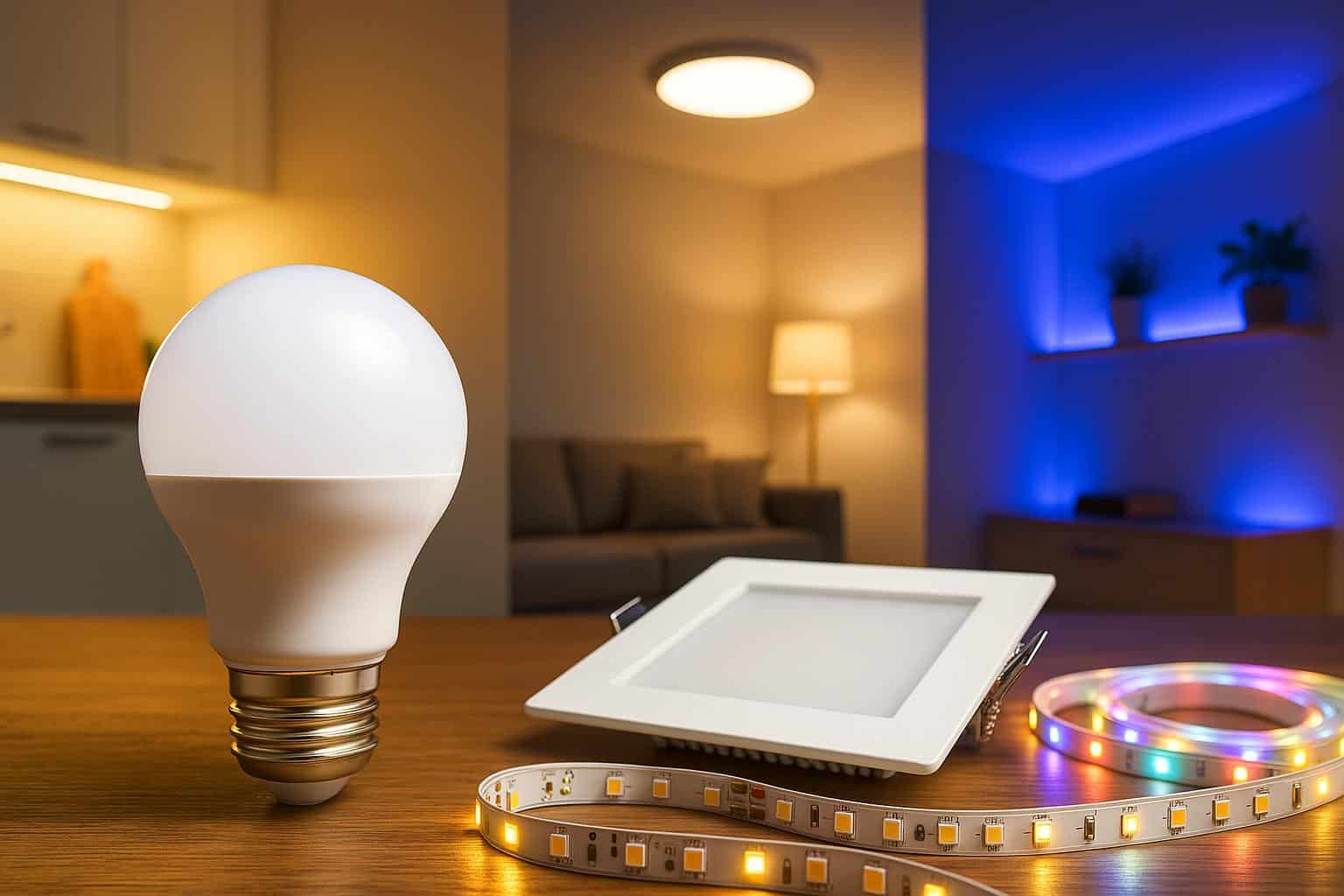
If you’re still lighting your home with incandescent or even older CFL bulbs, you’re paying more than you need to — in money, in maintenance hassle, and in missed comfort. LED (light-emitting diode) technology has matured dramatically over the past decade, and what was once a niche, expensive option is now the obvious default for virtually every fixture in the house. Here’s a comprehensive look at why switching makes sense, and how far the technology has come.
The Core Benefits
1. Dramatic Energy Savings
LEDs convert a far higher percentage of electricity into visible light rather than heat. Compared to traditional incandescent bulbs, LEDs typically use 75-80% less energy to produce the same amount of light. Even against CFLs, LEDs usually come out 20-30% more efficient. For a home with 30-40 bulbs running several hours a day, this can translate into real, noticeable savings on monthly electricity bills — often paying back the higher upfront cost within a year or two.
2. Exceptional Lifespan
A standard incandescent bulb lasts around 1,000 hours. A typical LED bulb from a well-known manufacturer, such as Integral LED, is rated for 15,000 to 50,000 hours — some premium fixtures even longer. That means a bulb used five hours a day could last 10-25 years before needing replacement. This dramatically reduces the hassle (and ladder-climbing) of constantly swapping bulbs, especially in hard-to-reach fixtures like vaulted ceilings or stairwells.
3. Lower Heat Output
Incandescent bulbs waste roughly 90% of their energy as heat. LEDs run much cooler, which means:
- Reduced fire risk, particularly in enclosed fixtures
- Less strain on air conditioning during summer months
- Safer operation around fabrics, paper, and other flammable materials in lamps and fixtures
4. Durability
LEDs are solid-state devices — no fragile filament or glass envelope to shatter. They handle vibration, knocks, and temperature swings far better than traditional bulbs, making them ideal for outdoor fixtures, garages, workshops, and areas prone to bumps (think kids’ rooms or laundry areas).
5. No Toxic Materials
Unlike CFLs, which contain mercury and require special disposal, LEDs contain no hazardous materials, making them safer for your home and easier to dispose of responsibly.
6. Instant, Flicker-Free Light
LEDs reach full brightness instantly — no warm-up lag like older CFLs — and quality LEDs produce stable, flicker-free light, which is easier on the eyes and reduces headache triggers for sensitive individuals.
7. Design Flexibility
Because LED chips are tiny, manufacturers can integrate them into slim, low-profile fixtures, flexible strips, and unconventional shapes that simply weren’t possible with bulky incandescent or fluorescent tubes. This opens up far more creative lighting design throughout a home.
Smart Features That Go Beyond Just “Light”
Modern LED technology isn’t just about efficiency — it’s increasingly about control and customization:
- Dimmability: Most LEDs now dim smoothly across a full range, and many are compatible with standard dimmer switches (always check compatibility, as not all LEDs play well with older dimmers).
- Tunable white and color-changing (RGB/RGBW) bulbs: You can shift from warm, cozy 2700K light in the evening to crisp, energizing daylight 5000K+ for tasks, or set any color from a smartphone app.
- Smart/connected bulbs: Wi-Fi and Bluetooth-enabled LEDs integrate with voice assistants and home automation systems, enabling scheduling, geofencing, scene-setting, and energy monitoring.
- Circadian lighting: Some systems automatically adjust color temperature throughout the day to support natural sleep-wake cycles — cooler and brighter in the morning, warmer in the evening.
Recent Developments: An LED for (Almost) Every Application
One of the biggest shifts in recent years is that LED technology has moved well past “screw-in replacement bulbs” into specialized formats that match nearly every lighting need in a home. Even a brief look at an online electrical retailer such as Alert Electrical will show the diverse range of LED lighting solutions that are now available. These include:
- Filament-style LEDs: These mimic the warm, vintage glow of old Edison bulbs — visible glowing filaments and all — while delivering full LED efficiency. Perfect for decorative pendants and exposed-bulb fixtures where the bulb itself is part of the aesthetic.
- High-CRI LEDs: Early LEDs were sometimes criticized for making colors look slightly “off.” Newer high color-rendering-index (CRI 90+) LEDs render colors much more accurately and naturally — important in kitchens, bathrooms, closets, and anywhere you check your appearance or true colors matter (like art studios or makeup areas).
- Flicker-free and low-blue-light LEDs: Designed for bedrooms and spaces used in the evening, these reduce eye strain and are better aligned with healthy sleep patterns.
- Slim LED panels and disc lights: Ultra-thin recessed and surface-mount fixtures that have largely replaced bulky recessed canisters, ideal for low-clearance ceilings.
- Flexible LED strips and tape lighting: Used for under-cabinet kitchen lighting, cove lighting, stair-tread lighting, and accent lighting around mirrors or architectural features — many now dimmable and color-tunable.
- LED candelabra and decorative bulbs: Tiny LED chips now fit into chandelier-style candelabra bulbs and other decorative shapes that were previously hard to replicate efficiently.
- Outdoor and landscape LEDs: Weatherproof, low-voltage LED options for pathway lighting, floodlights, and security lighting offer better efficiency and longevity than older halogen options, with motion-sensing and dusk-to-dawn features built in.
- LED grow lights: Tunable spectrum LEDs designed specifically for houseplants or indoor gardening, replacing inefficient and hot fluorescent or HID grow lamps.
- Smart fixtures with integrated drivers: Rather than separate bulbs, many new fixtures now have LEDs and drivers built directly into the fixture, improving thermal management and lifespan even further, though this means the whole fixture (not just a bulb) is typically replaced at end of life — worth knowing when choosing fixtures.
- Solar-powered LED fixtures: Improvements in both LED efficiency and small-scale solar panels have made solar landscape and security lighting genuinely viable, not just a gimmick.
A Few Practical Considerations
- Check dimmer compatibility: Not all LEDs work with all dimmer switches — look for “LED-compatible” dimmers or bulbs labeled for your specific dimmer type.
- Match color temperature to the room: Warmer tones (2700-3000K) suit living rooms and bedrooms; cooler tones (4000-5000K) work well in kitchens, bathrooms, and workspaces.
- Look for CRI ratings if accurate color matters to you.
- Consider enclosed fixture ratings: Some LEDs aren’t rated for fully enclosed fixtures, where heat can build up — check packaging.
The Bottom Line
LED lighting has evolved from a simple energy-saving swap into a genuinely versatile lighting platform — one that can replicate vintage aesthetics, support healthier sleep, adapt to smart home ecosystems, and fit virtually any fixture type in the home. With falling prices and improving quality, there’s now little reason to keep any old-style bulb in service. Whether you’re doing a room-by-room swap or a full-home overhaul, the combination of lower bills, less maintenance, and far greater design flexibility makes LED lighting one of the easiest home upgrades to justify.

Angela Spearman is a journalist at EzineMark who enjoys writing about the latest trending technology and business news.
