


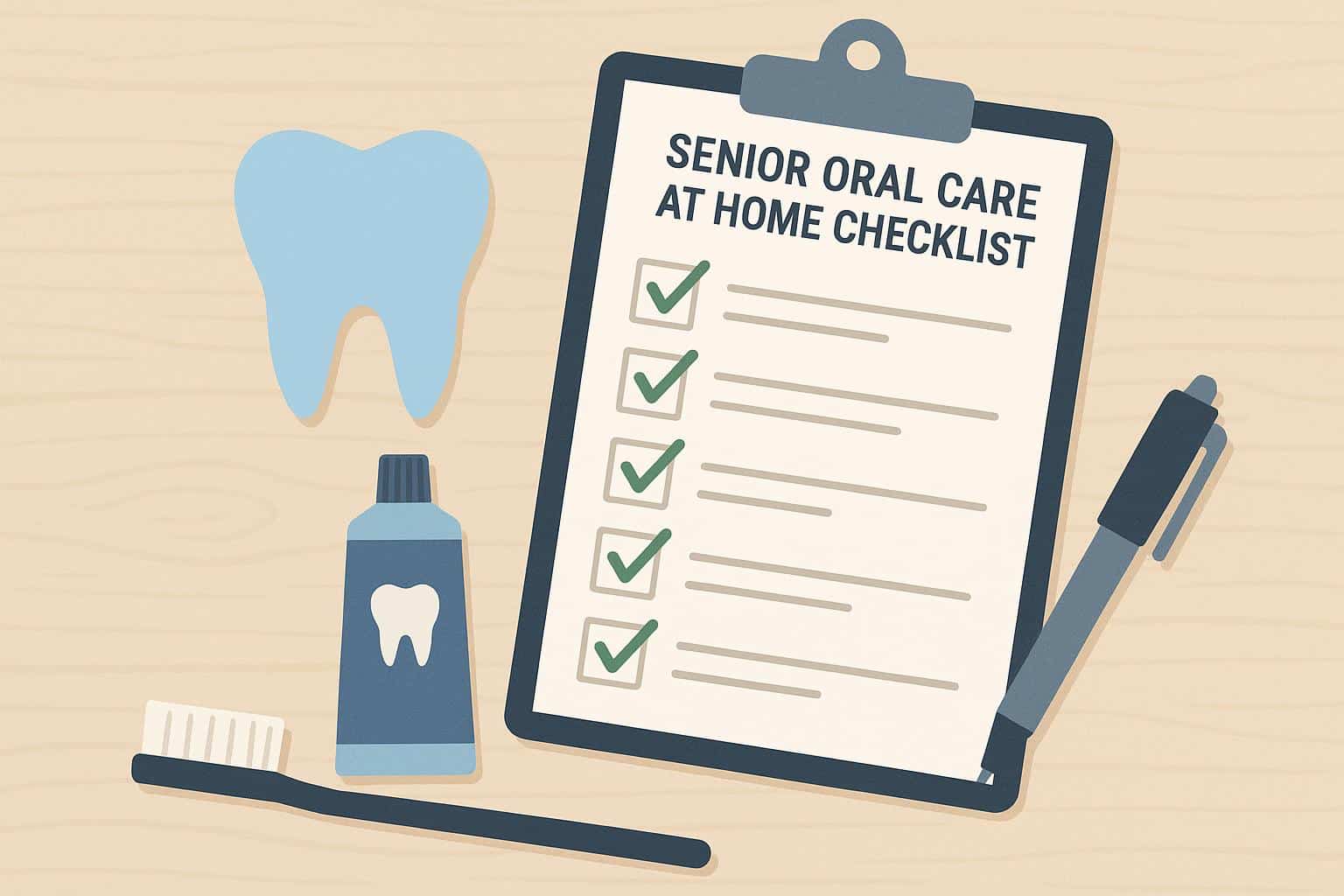
Senior oral care at home often gets harder before anyone says it out loud. Skipped brushing. More snacks between meals. A dental visit that suddenly feels like a bigger job than it used to be. For caregivers, the goal is not perfection. It is keeping the routine steady enough to protect comfort, eating, and health. If your loved one takes anticoagulants, caregiver prep checklist for seniors on blood thinners can help you organize the medication list, prescriber details, and the basics a dental office may need before treatment.
Most oral care problems do not start with a major emergency. They build slowly. Dry mouth makes food stick more. Loose dentures make chewing less appealing. Then softer, sweeter foods start showing up more often because they feel easier. Over time, that small shift can create bigger trouble.
The good news is that a better routine does not have to be complicated. A few simple habits usually matter most.
Why Senior Oral Care at Home Gets Off Track
Daily oral care changes with age for practical reasons. Hands may hurt. Energy may dip. Memory may not be reliable. Some people start avoiding brushing because their mouth feels sore, dry, or sensitive. Others stop mentioning problems because they assume discomfort is normal.
That is where caregivers often make the biggest difference. You do not need a perfect setup. You need a routine that can survive a normal day.
Usually, that means paying attention to a few patterns:
- brushing gets rushed or skipped
- snacks become more frequent
- water intake drops
- dentures start bothering the mouth
- dental visits get delayed
When those patterns show up together, oral health tends to slide fast.
Start With the Daily Basics
The basics still do most of the work. Brush twice a day with fluoride toothpaste. Clean between teeth once a day. If dentures are part of the routine, rinse them after meals and clean them every day.
Keep supplies easy to reach. That sounds small, but it matters. If the toothbrush, toothpaste, denture cup, or floss picks are tucked away, the routine is easier to skip.
It also helps to match the routine to the person, not the clock. Some people do better in the morning. Others are calmer at night. Pick the time that is most likely to happen again tomorrow.
Senior oral care at home gets easier when the steps feel familiar and manageable. A simple routine often beats an ideal routine that never sticks.
Review Medications Before the Next Dental Visit
Medication changes affect the mouth more than many families expect. Some medicines can dry the mouth. Others can raise bleeding concerns during treatment. That is why the medication list should always travel with the patient, especially if more than one provider is involved.
Before the appointment, review what to tell the dentist before dental work if a senior takes blood thinners so there is less confusion on appointment day.
Bring the basics every time:
- current medications
- recent changes
- allergies
- the name of the prescriber
- the best phone number for the caregiver
Do not guess about stopping medication. That creates an avoidable risk. The dentist and prescribing doctor should decide what changes, if any, are needed.
Written notes help too. If there has been recent bleeding, new swelling, trouble eating, or a change in denture fit, write it down before the visit. Small details are easy to forget once the appointment starts.
Make Meals and Snacks Easier on Teeth
Food choices matter, but not in the way many people think. The issue is often not one treat. It is the pattern around it. Sticky foods, sugary drinks, and all-day grazing keep teeth under pressure longer.
For everyday prevention, it helps to keep a short list of simple tooth-friendly snack swaps so sugary, sticky foods do not become the default between meals.
A better snack routine does not need a long list of rules. It usually comes down to a few smart choices:
- pick softer foods when chewing is harder
- limit sticky sweets that cling to teeth
- keep snacks to set times instead of constant grazing
- offer water after snacks
The easier option usually wins. So, make the better option easier to grab. Yogurt, cheese, eggs, soft fruit, or nut butter on toast often work better than candy, crackers, or sweet baked snacks. A short list is enough.
If dry mouth is part of the picture, moisture matters even more. Water nearby can help. So can foods that are softer and less salty. When the mouth is dry, even an average snack can feel harder on teeth and gums.
Watch for Dry Mouth, Bleeding, and Denture Trouble
A lot of oral care issues start with a symptom that seems minor at first. Dry mouth. Tender gums. A denture that suddenly feels off. These changes are easy to brush aside, but they usually mean the routine needs attention.
Dry mouth is a common one. It raises cavity risk and can make chewing, swallowing, and denture use less comfortably. A person may start choosing sweet or soft foods more often because they feel easier. That can create a cycle that is hard to see until problems build up.
Bleeding gums matter too. So do sores, pain, swelling, bad breath that sticks around, and dentures that rub or shift. If chewing starts to hurt, food choices often get worse before anyone talks about the cause.
Senior oral care at home works best when you catch those small changes early. Waiting usually makes the fix harder.
Prepare for the Visit Without Making It a Bigger Deal Than It Needs to Be
The appointment itself is only part of the job. What happens before and after often matters just as much.
Try to schedule earlier in the day if possible. Bring the medication list, insurance card, and any written notes about symptoms. Plan a calm ride home. If the person may be tired or unsteady afterward, think through the trip before leaving the house.
It also helps to ask for written instructions after treatment. That cuts down on mix-ups later, especially when more than one family member is helping.
This part is simple, but it saves stress: know who is calling the office if a question comes up later. When everyone assumes someone else will do it, the call gets delayed.
A Simple Caregiver Checklist to Keep Things Steady
If the routine feels scattered, go back to the shortest version of the plan:
- brush twice a day with fluoride toothpaste
- clean between teeth once a day
- clean dentures every day
- keep water close by
- limit all-day snacking
- review medications before dental visits
- watch for dryness, pain, bleeding, or mouth sores
- keep regular dental appointments on the calendar
That is enough to support senior oral care at home in a way that feels realistic.
FAQ
What is the most important part of senior oral care at home?
The most important part is consistency. Brushing twice a day, cleaning between teeth, managing dentures, and keeping regular dental visits matter more than having a complicated plan.
How do caregivers help with senior oral care at home?
Caregivers help by keeping the routine simple, watching changes, tracking medications, and making dental visits easier to manage. They often notice dry mouth, sore spots, or eating changes before anyone else does.
What snacks are better for older adults with dental problems?
Softer, less sticky snacks usually work better. Good options are easier to chew, less sugary, and less likely to stay on the teeth for a long time.
Why does dry mouth matter so much in older adults?
Dry mouth raises the risk of cavities and can make eating, swallowing, and denture use harder. It is often linked to medications, which means it can show up even when the rest of the routine seems the same.
Should a senior stop blood thinners before dental work?
No. Medication changes should only happen when the dentist and prescribing doctor agree on a plan. Stopping a blood thinner without guidance can create serious risks.
Key Takeaway
Senior oral care at home does not have to be perfect to work. Most of the time, it comes down to a few repeatable habits, a better snack routine, clear medication communication, and earlier attention to small symptoms. When those pieces stay in place, daily care feels less stressful, and dental visits become easier to manage. That is what keeps the routine steady over time.

Angela Spearman is a journalist at EzineMark who enjoys writing about the latest trending technology and business news.
