


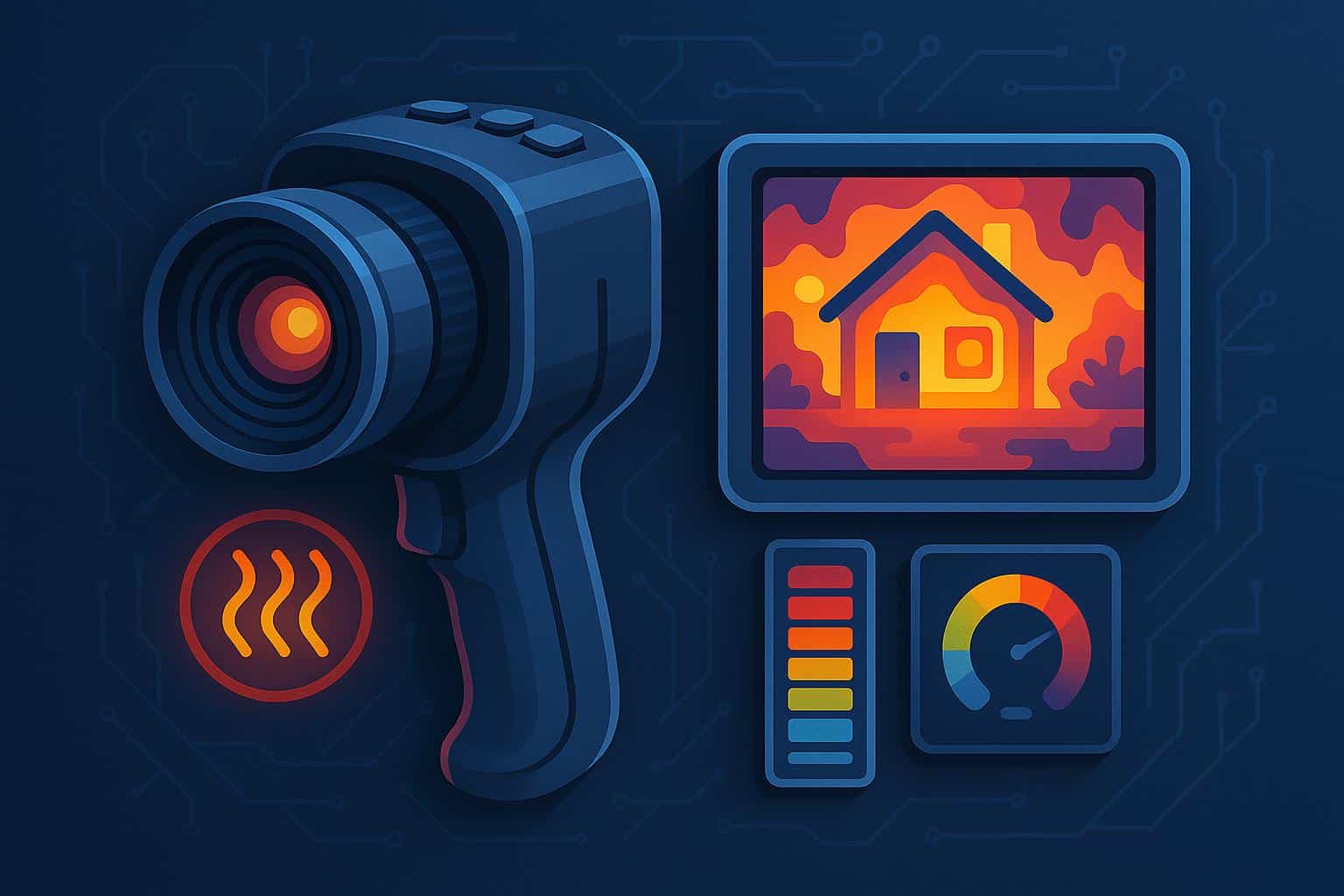
The Science Behind Thermal IR Sensors: How They Work and Why They Matter
Understanding Electromagnetic Radiation: The Foundation of Thermal Imaging
At the core of thermal infrared (IR) sensors is the science of electromagnetic radiation, a phenomenon that encompasses a wide variety of energy forms, from visible light to radio waves and, notably, infrared radiation. Electromagnetic radiation consists of oscillating electric and magnetic fields that propagate through space, with different wavelengths corresponding to different types of radiation. The understanding of this spectrum is fundamental to grasp the essence of thermal imaging technology. Unlike visible light, which is limited to wavelengths between approximately 400 and 700 nanometers, infrared radiation ranges from about 700 nanometers to 1 millimeter. This spectral region is further divided into near-infrared (NIR), mid-infrared (MIR), and far-infrared (FIR) segments, each serving distinct purposes across various applications.
The ability of an object to emit, absorb, or transmit electromagnetic radiation hinges on its temperature, a principle that plays a pivotal role in thermal imaging. All objects above absolute zero radiate energy in the infrared spectrum, and the intensity of this radiation increases with temperature. This relationship is articulated in Planck's law, which describes the spectral density of electromagnetic radiation emitted by a black body in thermal equilibrium. Therefore, thermal IR sensors leverage this fundamental property of matter to capture temperature variations and visualize them as thermal images, making the invisible world of infrared radiation accessible for practical applications.
The Phenomenon of Infrared Radiation: A Deep Dive into Heat Detection
Infrared radiation is often misunderstood, yet it is a critical component of our everyday lives, significantly influencing fields like meteorology, astronomy, and healthcare. In simple terms, infrared waves are emitted by all objects with a temperature above absolute zero, meaning everything from the human body to celestial bodies emits IR radiation. This unique property is utilized to detect heat through thermal sensors, which can capture changes in thermal energy and create images represented in varying color scales. Warmer areas may appear in shades of red or white, while cooler areas appear blue or dark. This color representation not only provides an intuitive understanding of temperature distribution but also aids in diagnosing potential issues in equipment, monitoring environmental changes, or providing actionable data in various applications.
The ability to detect infrared radiation has been enhanced through innovative materials and technologies, enabling sensors to distinguish between thermal emissions from closely-spaced surfaces. Traditional thermal imaging relied on bulky equipment; however, advancements have led to the development of lightweight, compact thermal IR sensors that can easily be integrated into smaller devices like smartphones and drones. This revolution in technology has democratized access to thermal imaging applications, fostering a new wave of interest across industries from public safety to aerospace engineering.
The Role of Sensor Materials: From Thermocouples to Quantum Dots
The efficacy of thermal IR sensors is heavily influenced by the sensor materials employed. Traditional sensors, such as thermocouples, utilize the principle of thermoelectric voltage generation, which occurs when two different conductive materials are joined together and experience a temperature difference. This technology, while reliable, has limitations in terms of resolution and speed. This necessity for advancement led to the exploration of more sophisticated materials, particularly those based on semiconductors and quantum physics.
Modern sensors often employ materials like indium antimonide (InSb), mercury cadmium telluride (MCT), and other compound semiconductors that exhibit high sensitivity to infrared radiation. The development of quantum dot technology is particularly promising; these nanoscale semiconductor particles can be engineered to absorb specific infrared wavelengths, enhancing the sensor's ability to detect minute temperature changes. The introduction of microbolometer technology, which utilizes a change in resistance caused by temperature variation, has further expanded the capabilities of thermal sensors, enabling manufacturers to create devices that are more sensitive, compact, and affordable. The continuous evolution of sensor materials indicates a future poised for remarkable innovations, particularly as industries such as automotive and consumer electronics invest heavily in modern thermal imaging solutions.
Applications of Thermal IR Sensors: More Than Just Heat Detection
Revolutionizing Medical Imaging: Tracking Temperature Variations
The medical field has seen transformative changes with the adoption of thermal IR sensors, particularly in the realm of diagnostic imaging. Thermography, a non-invasive imaging technique, leverages the unique ability of thermal sensors to visualize temperature variations across the human body. This innovation is particularly valuable in oncology for the diagnosis of breast cancer. Tumors often display higher metabolic activity and, consequently, elevated temperatures compared to surrounding tissues, making them detectable through thermal imaging. Moreover, this technique is being increasingly used to monitor circadian rhythms and metabolic changes in patients, allowing for comprehensive health assessments.
Beyond oncology, thermal IR sensors are gaining popularity in the detection of musculoskeletal disorders, inflammation, and other pathologies characterized by localized temperature changes. The potential for real-time monitoring and assessment provides healthcare professionals with invaluable data for preventive measures and treatment responses. Additionally, COVID-19 highlighted the necessity of non-contact temperature measurement for public safety, paving the way for thermal imaging systems at airports and hospitals to screen individuals for fever, a common symptom of infection.
Enhancing Home Security: How Smart Surveillance Benefits from IR Technology
The integration of thermal IR sensors into home security systems marked a significant advancement in the capability to monitor and protect residential properties. Traditional surveillance cameras reliant on visible light can struggle in low-light conditions or complete darkness. Thermal imaging surpasses these limitations by detecting heat signatures emitted by people, animals, or objects, ensuring continuous surveillance regardless of lighting conditions. This capability provides homeowners with peace of mind, allowing for proactive measures in addressing potential security threats.
Smart surveillance systems equipped with thermal IR sensors can be programmed to trigger alarms when they detect unusual movement or temperature variations. This technology empowers homeowners to receive real-time alerts directly to their smartphones, enabling rapid responses to potential intrusions. Furthermore, with the incorporation of machine learning algorithms, advanced systems can distinguish between benign entities, like pets, and potential threats, significantly reducing false alarms. The growing trend of smart home technology increasingly integrates thermal imaging, reinforcing the importance of thermal IR sensors in enhancing overall safety and security.
Industrial Efficiency: Using Thermal Sensors for Predictive Maintenance
Within an industrial context, thermal IR sensors are pivotal in optimizing operational efficiency and safety through predictive maintenance. Overheating machinery can lead to equipment failure, costly repairs, and unsafe operational environments. Thermal imaging allows for continuous monitoring of plant equipment to identify hot spots, imbalances, or abnormal temperatures indicative of impending failure. Periodic inspections using thermal IR sensors can mitigate downtime and enhance productivity by scheduling maintenance before failures occur, thus minimizing interruptions and optimizing resource allocation.
The application of thermal imaging in industries such as power generation, manufacturing, and aerospace exemplifies its role in smart factory initiatives, where the Internet of Things (IoT) is progressively being integrated. By leveraging thermal data in conjunction with other operational data, companies can gain holistic insights into their processes, fostering a proactive maintenance culture that not only saves costs but also enhances safety standards in workplaces. The significance of this application is heightened in industries where safety regulations are stringent, solidifying the role of thermal IR sensors as essential tools for modern industrial operations.
Choosing the Right Thermal IR Sensor: A Guide for Enthusiasts and Professionals
Key Specifications to Consider: Sensitivity, Resolution, and Range
When selecting a thermal IR sensor, several key specifications must be considered to meet specific operational needs. Sensitivity refers to the sensor’s ability to detect minute temperature differences, expressed in milli-Kelvin (mK). Higher sensitivity allows for the detection of smaller temperature variances, which is vital in applications like medical diagnostics or energy audits. Resolution, indicated by the number of pixels in the thermal image, directly affects the clarity and detail captured in thermal imaging. A higher spatial resolution yields more detailed images, which can be crucial for applications requiring precise identification of hot spots.
Range is another critical factor; it refers to the operational temperature range the sensor can effectively monitor. For instance, sensors used in industrial settings may need to operate across a wider temperature spectrum than those intended for medical use. Additionally, factors such as response time, how quickly the sensor can provide a reading and the field of view indicating how much area can be captured in a single scan are paramount in optimizing sensor performance for specific scenarios. An understanding of these specifications will guide enthusiasts and professionals alike in making informed choices tailored to their unique applications.
Cost vs. Performance: Finding the Best Value in Thermal Technology
Buying thermal IR sensors often involves a delicate balance between cost and performance. While it may be tempting to opt for lower-cost alternatives, it’s essential to consider the implications of reduced sensitivity, resolution, and reliability. For professional applications, investing in a quality sensor can translate to enhanced accuracy and improved reliability, ultimately saving costs in the long run through efficiency and reduced failure rates. It’s important to evaluate the total cost of ownership, factoring in not only the upfront cost but also maintenance, potential downtime, and replacement costs. Thoroughly researching and comparing options across reputable brands ensures a well-rounded decision that optimizes both budget and performance.
Expert Recommendations: Top Brands and Models in Different Market Segments
The thermal IR sensor market is populated with established brands and newcomers offering various models catering to diverse applications. Notable brands include FLIR, Seek Thermal, and Testo, each known for their reliability and innovation. For industrial applications, FLIR’s T1K series and E95 offer advanced features suited for predictive maintenance, while Seek Thermal’s compact smartphone accessory provides an accessible entry point for enthusiasts seeking to explore thermal imaging without substantial investment. In the medical field, FLIR’s A320 offers precision in diagnostic imaging, equipped with high-resolution capabilities recently tailored for health professionals. As technology continues to evolve, keeping abreast of brand developments and product reviews further guides users in selecting devices that best suit their needs, ultimately maximizing the utility of thermal IR technology.
The Future of Thermal IR Sensors: Innovations on the Horizon
Advancements in Sensor Technology: What’s Next for Infrared Imaging?
The landscape of thermal IR sensors is dynamic and marked by rapid advancements in technology, ushering in exciting possibilities for the future. Emerging technologies, such as micro-electromechanical systems (MEMS) and advances in nanomaterials, are poised to revolutionize the capabilities of thermal sensors. MEMS technology, which miniaturizes sensor components, allows for highly sensitive and compact devices that can be integrated seamlessly into various applications, including consumer electronics and smart appliances. Furthermore, research into graphene and other two-dimensional materials is paving the way for sensors with unprecedented sensitivity and operational wavelengths, significantly extending the applications of thermal imaging.
Moreover, the continued decrease in cost of manufacturing and enhancements in computational capabilities will likely lead to wider adoption of thermal sensors across industries. The integration of these advanced thermal sensors into existing technologies, coupled with data analysis tools, will enable smarter predictive analytics, empowering businesses to make informed decisions based on real-time thermal data.
Integration with AI and IoT: The Next Level of Smart Sensing
The convergence of thermal imaging technology with artificial intelligence (AI) and the Internet of Things (IoT) represents a transformative opportunity for industries to glean actionable insights from thermal data. By integrating AI algorithms capable of pattern recognition, thermal IR sensors can recognize distinct thermal signatures associated with specific conditions, improving diagnostic accuracy and predictive maintenance. In smart factories, thermal sensors connected to IoT platforms can facilitate real-time monitoring and enable autonomous responses to changes in temperature that could signify operational issues.
This integration fosters enhanced industrial processes, from optimizing energy consumption based on thermal profiling to enabling smart home technologies that adapt based on real-time thermal feedback. The potential for AI and IoT integration in monitoring environmental changes, health conditions, energy efficiency, and safety is vast, pointing towards a synergetic future where thermal imaging serves as an integral part of a web of interconnected technologies.
Environmental Monitoring: The Role of Thermal Sensors in Sustainability Efforts
As global concerns regarding climate change and resource sustainability heighten, thermal IR sensors play a crucial role in environmental monitoring. These sensors can detect temperature anomalies in natural environments, contributing valuable data for climate studies and ecological assessments. For instance, thermal imaging is instrumental in identifying heat flow in geothermal sites and detecting methane leaks from oil and gas pipelines. Moreover, in agriculture, thermal sensors can monitor crop health by detecting variances in plant temperature, enabling farmers to manage irrigation more effectively, conserve water, and optimize yield sustainably.
Furthermore, the application of thermal imaging extends to urban planning, allowing for the assessment of heat islands in densely populated cities and informing strategies for urban sustainability. As organizations and communities adopt thermal imaging technologies for environmental monitoring, they can implement proactive measures to address sustainability challenges and work towards reducing their ecological footprint. The future of thermal IR sensors is not only promising for technological advancements but significantly impactful in advancing global sustainability efforts.

Angela Spearman is a journalist at EzineMark who enjoys writing about the latest trending technology and business news.
